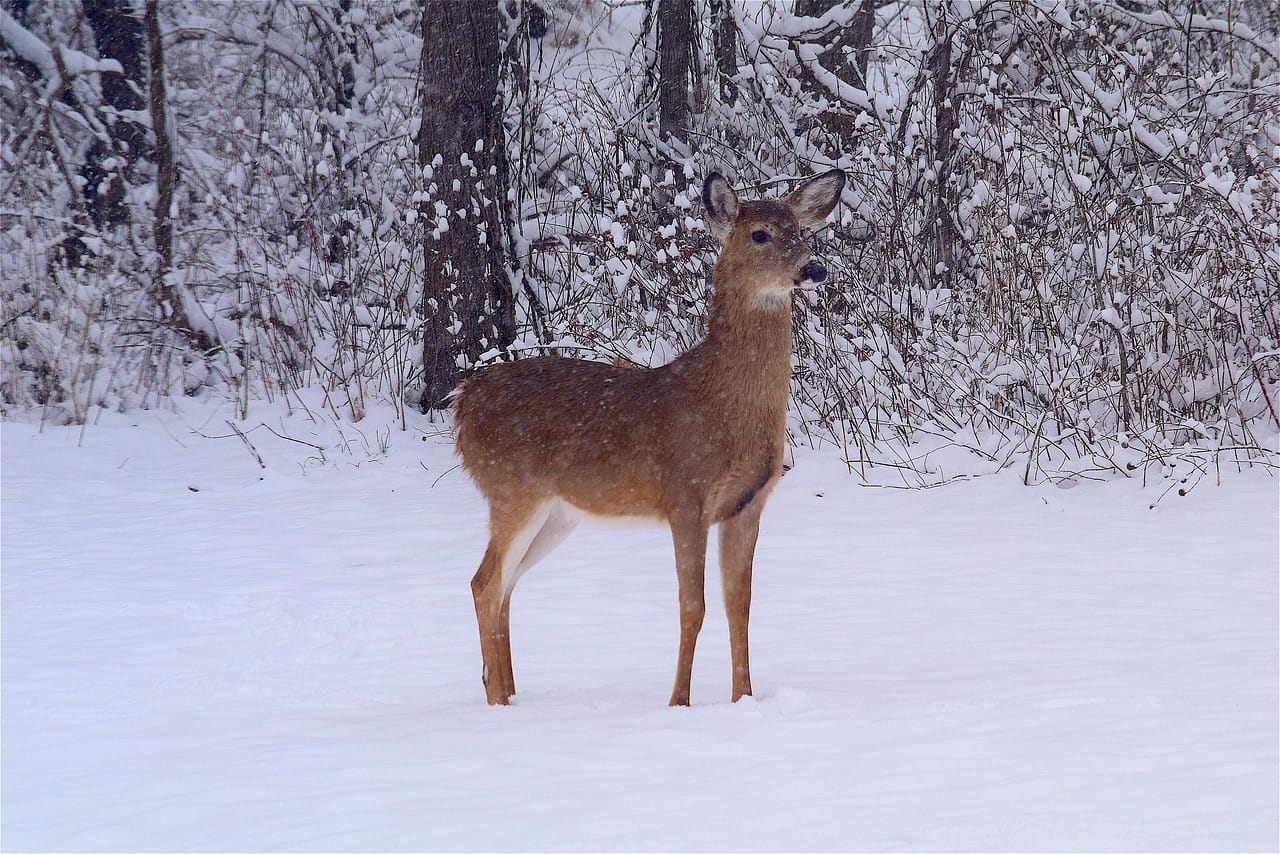
To hunt deer in the late season, hunt the food. After the rut, deer have to find enough calories to survive without burning too much energy getting them, a Virginia DWR biologist explains, so late-season movement centers on feeding (Virginia DWR). The usual best setup is a travel corridor between bedding cover and a late-season food source (Virginia DWR).
Key Takeaways
- Deer still move mostly at dawn and dusk in December, but snow, intense cold and high wind can push them to move during the warmest part of the day (Virginia DWR).
- By winter, most white oak acorns are gone. Chestnut oak and red oak acorns, which are high in tannins, may still be on the ground (Virginia DWR).
- A DWR biologist calls the late season “probably the most challenging time of the entire deer season to kill a big buck” (Virginia DWR).
- One main purpose of Virginia’s late seasons is giving hunters a chance at a few more does (Virginia DWR).
What do deer eat in the late season?
Whatever’s left. By winter most white oak acorns are gone, so deer work through the high-tannin acorns, browse and whatever green or grain a field still holds (Virginia DWR).
| Food | Notes from Virginia DWR |
|---|---|
| Chestnut oak, red oak acorns | Often the last acorns left (VA DWR) |
| Greenbrier, honeysuckle, privet | Lower-quality browse deer turn to in December (VA DWR) |
| Young-forest browse, stems and twigs | Thick early successional areas and hinge cuts (VA DWR) |
| Wheat, oats, rye | Green fields and openings (VA DWR) |
| Sugar beets, turnips, cover crops | Food plots (VA DWR) |
| Standing corn, grain sorghum | Agricultural fields (VA DWR) |
| Persimmons | Can hold fruit late into the season (VA DWR) |
Where should you set up for late-season deer?
Between bed and food. The DWR biologist suggests thick early successional cover that adjoins a good food source (Virginia DWR).
Deer that move before dark are looking for food. Older bucks that have been pressured for months are less likely to show in daylight, which is why the same biologist calls this the hardest stretch of the year to kill a big buck (Virginia DWR).
Do cold and snow change late-season deer movement?
They can. Deer still move mostly in the morning and evening in December. Snow, intense cold and high wind can push them to move during the warmest part of the day instead (Virginia DWR).
How does hunting pressure change late-season deer?
DWR says gun-season pressure affects movement, and where pressure is lighter, deer resume normal activity faster (Virginia DWR). Our Virginia deer season page covers how that plays out in the state’s western mountains.
Is the late season a good time to shoot a doe?
Often, yes. DWR says one main purpose of Virginia’s late seasons is to give hunters a chance to harvest a few more does (Virginia DWR). Check your own state’s antlerless rules and dates first, on our deer season 2026 hub. Illinois hunters have their own late-season guide.
The other side of it
Late season rewards the hunter who scouted food, not the one who sat the same rut stand for six weeks and wonders where everyone went. The deer did not leave. They went to dinner.
Keep reading
Latest deer news
Comments