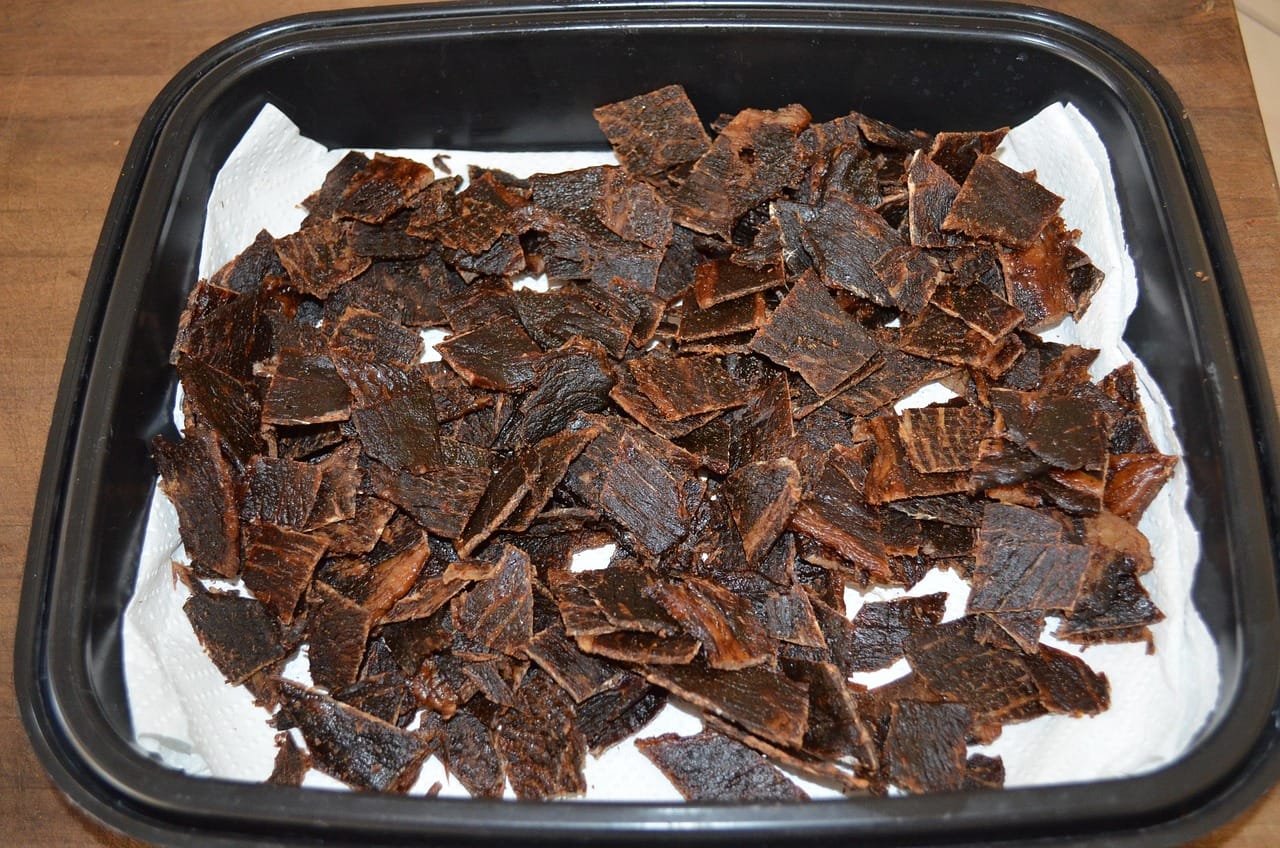
How long to marinate venison jerky depends on the method, but the standard answer is 1 to 2 hours or overnight, in the refrigerator. Penn State Extension sums up the National Center for Home Food Preservation’s guidance this way: it “allows you to marinate the strips of meat 1 to 2 hours or overnight in the refrigerator before cooking it to 160°F in the marinade, but cautions that meat marinated for several hours may be very salty” (Penn State Extension). Some extension recipes run longer, up to about a day. None of them skip the fridge or the heat step.
Key Takeaways
- Standard range: 1 to 2 hours or overnight, refrigerated, per the National Center for Home Food Preservation.
- Utah State’s vinegar method marinates 1 to 24 hours. North Dakota State’s cooker method allows four to 25 hours.
- Longer isn’t always better. NCHFP warns long marinades can make jerky saltier than you want.
- If you precook strips in boiling marinade, NDSU says not to soak them raw first.
- Always marinate in the refrigerator, and heat the strips to 160°F before or as part of drying.
How long to marinate venison jerky, by method
The time changes with how you plan to make the jerky safe. Here are the extension recommendations we found.
Marinate, then heat (NCHFP). The National Center for Home Food Preservation’s jerky marinade recipe ends with “Cover and refrigerate 1-2 hours or overnight.” It adds: “If you choose to heat the meat prior to drying to decrease the risk of foodborne illness, do so at the end of the marination time” (NCHFP).
Vinegar dip, then marinate (Utah State). Utah State University Extension’s venison guide uses a vinegar pretreatment. You “Let soak 10 minutes, stirring occasionally to ensure distribution of vinegar on strips,” then marinate in a sealed bag: “Refrigerate bag 1 to 24 hours.” USU says “In this method acid from vinegar is used to kill some or all of the illness causing bacteria” (Utah State University Extension).
Cold marinade, then a hot cooker (NDSU). North Dakota State University Extension says that if you have a smoker or cooker that gets hot enough to fully cook the meat, “you can place the jerky into a nonboiling marinade and allow it to soak at refrigerator temperatures for four to 25 hours.” It adds: “be sure the product’s temperature reaches at least 160 F to ensure any bacteria are destroyed” (NDSU Extension).
Boil in the marinade (NDSU and USU). Here there’s no soak at all. NDSU says “For most home jerky production, raw, sliced meat is placed into boiling marinade to cook the meat before drying.” It warns: “Soaking the strips in marinade before precooking is not advised because the marinade could become a source of bacteria.” USU’s hot cure method dips strips in simmering marinade “for 1 1⁄2 to 2 minutes,” then has you “Cover with plastic wrap and refrigerate overnight” before drying.
Can you marinate venison jerky too long?
For flavor, yes. NCHFP says “Products marinated for several hours may be more salty than some people prefer.” Soy sauce, Worcestershire and smoked salt are all in its recipe, so the salt adds up the longer strips sit.
For safety, the limit is time in the fridge, not time in the marinade. NDSU says to “Use refrigerated ground meat within two days or whole red meats within three to five days.” Strip thickness matters for the heat step. NCHFP says to “Slice meat no thicker than ¼ inch,” and Penn State’s range is ¼ to ⅜ inch. If you want to stretch past the ranges above, we couldn’t find an extension source that tests it, so we wouldn’t.
Where should venison jerky marinate?
In the refrigerator, every time. NCHFP says plainly: “Marinate meat in the refrigerator.” NDSU says the same: “Marinate raw meat in the refrigerator.” Penn State adds: “Do not reuse marinades.”
Wild game has one more step before the marinade. NCHFP says “If pork or wild game is used to make jerky, the meat should be treated to kill the trichinella parasite before it is sliced and marinated.” Penn State spells out the venison version: “freeze at 0°F or below in portions that are six inches or less in thickness at for at least 30 days to kill trichinella parasites that might be in the venison.” Our page on freeze protocols for wild game jerky covers the details.
What temperature does marinated venison jerky need to reach?
160°F. That’s RAD’s house temperature for venison, following Penn State Extension’s canning and freezing guide: “Cook venison, including jerky, to a minimum internal temperature of 160°F to reduce the risk of food-borne illness” (Penn State Extension).
Marinating doesn’t do that job. NDSU says “Simply marinating and drying meat does not ensure that potentially harmful bacteria have been killed.” Penn State says “Heating the meat to 160°F before dehydrating assures that any bacteria present will be destroyed.” Its oven option: “Heat for 10 minutes in an oven preheated to 275°F so strips reach a temperature of 160°F.” Check a few strips with a thermometer. For drying temperatures after that, see safe dehydrator and oven temps for venison jerky.
One heads-up if your marinade is sweet. Sugar can scorch when you preheat strips. Our page on sweet marinade burn on high heat explains how to handle it. For the full process, start with our venison jerky guide.
FAQ
How long should I marinate deer jerky? 1 to 2 hours or overnight in the refrigerator, per NCHFP. Utah State’s vinegar method allows 1 to 24 hours.
Can I marinate venison jerky for 48 hours? We found no extension guidance that goes past about a day. NDSU’s longest listed soak is 25 hours, refrigerated.
Does a longer marinade make jerky safer? No. NDSU says marinating and drying alone don’t ensure bacteria are killed. Heat strips to 160°F.
Should I marinate jerky in the fridge or on the counter? The fridge. NCHFP, NDSU and Penn State all say to marinate in the refrigerator.
The other side of it
Plenty of jerky makers swear by a 48-hour soak and say the extension times are too short to get real flavor into the meat. They might like the taste. But past a day, nobody here has tested it, and NCHFP already warns that long soaks turn salty. If you want more flavor, a bolder marinade is a safer bet than a longer clock. The guy who marinates for three days and then calls his jerky aged is mostly just making it saltier.
Keep reading
Latest deer news
Sources
- Drying Jerky, Penn State Extension
- Drying Jerky, National Center for Home Food Preservation (University of Georgia)
- Venison, Utah State University Extension
- "Jerky Making: Producing a Traditional Food With Modern Processes", North Dakota State University Extension
- Canning and Freezing Venison, Penn State Extension
Comments