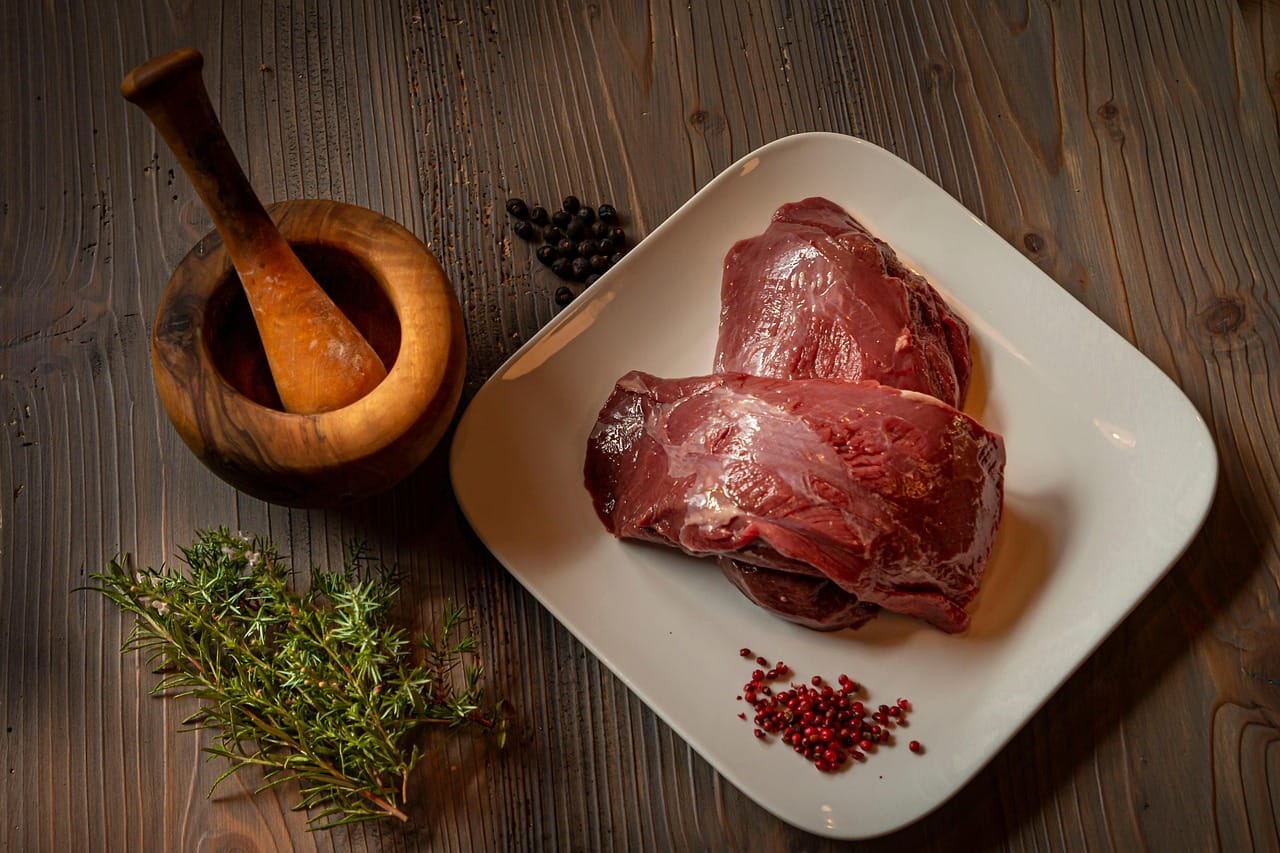
Can you eat venison raw? People do, but health departments say not to. The New York State Department of Health lists “Eating undercooked or raw game meat, especially venison (deer meat) or bear meat” as a way people get toxoplasmosis (NYSDOH). Minnesota’s Department of Agriculture says to cook venison to “at least 165°” (MDA). In 2024, a toxoplasmosis outbreak in New York was tied to venison dinners where leftover raw venison tested positive for the parasite. This is general food-safety information, not medical advice.
Key Takeaways
- Health departments advise against raw venison. Minnesota’s Department of Agriculture says to cook venison to “at least 165°” Fahrenheit.
- Raw or undercooked venison can carry Toxoplasma gondii. New York links it to an outbreak that “sickened at least 43 people.”
- E. coli from a deer’s gut can get on the meat. New York says clean butchering and cooking prevent it.
- RAD’s house temperature for venison is 160°F. Other sources differ: Minnesota says 165°F, and Penn State’s field-to-table figure for whole cuts is 145°F.
- New York warns that for pregnant women, the toxoplasmosis parasite can harm the baby.
Why is raw venison risky?
Two problems come up most in the health guidance we read: a parasite and gut bacteria.
Toxoplasmosis. New York’s health department says “The parasite can live in game meat, especially venison (deer meat) and bear meat.” Its wild-game page says “Toxoplasmosis can be spread by eating undercooked, contaminated meat such as venison, unwashed fruits and vegetables, and unpasteurized milk” (NYSDOH). The department warns that for pregnant women, “the parasite can harm the baby.”
E. coli. New York says E. coli “can cause severe illness in humans,” and that the “infection can be prevented by using proper butchering techniques that avoid contact with intestinal contents, and by cooking meats to the above recommended cooking temperatures” (NYSDOH). Raw meat skips the second half of that.
Has raw venison actually made people sick?
Yes. New York’s health department describes “A toxoplasmosis outbreak linked to venison game dinners held on January 19 and 20, 2024 in Westchester County, New York,” which “sickened at least 43 people.” It says “Laboratory testing confirmed that leftover raw ground meat and backstrap venison were positive for Toxoplasma gondii.” Among people who contacted the health department, “Almost half sought medical care, and 15 people tested positive for toxoplasmosis” (NYSDOH).
That’s one outbreak, not a measure of how often deer carry the parasite. We didn’t find an official figure for how common Toxoplasma is in deer meat, so we don’t give one.
Does freezing venison make it safe to eat raw?
Freezing helps against the parasite, but it isn’t the same as cooking. New York’s toxoplasmosis page lists “Freeze game meat for at least 3 days at sub-zero temperatures” among steps that lower your chances of infection. It lists cooking as a separate step. Freezing doesn’t address bacteria the way cooking does. New York’s E. coli advice relies on clean butchering and cooking.
What temperature makes venison safe?
The sources don’t agree on one number:
| Source | Venison temperature |
|---|---|
| Penn State Extension (canning and freezing guide; RAD’s house number) | “a minimum internal temperature of 160°F” |
| Minnesota Department of Agriculture | “at least 165°” |
| Penn State Extension | whole cuts “to 145°F (63°C) (medium rare); ground meat to 160°F (71°C)” |
Minnesota adds that “The color of the meat is not a reliable indicator of when the venison is fully cooked” (MDA). Penn State’s 145°F applies to “whole cuts, steaks, and roasts” (Penn State Extension). RAD’s house temperature for venison is 160°F, following Penn State Extension’s canning and freezing guide: “Cook venison, including jerky, to a minimum internal temperature of 160°F to reduce the risk of food-borne illness” (Penn State Extension). Whichever number you follow, use a thermometer. For ground meat, see our guide on why grinding spreads surface bacteria.
What about CWD?
Cooking doesn’t help here. New York says “Cooking does not remove the risk of CWD,” though “there is currently no evidence that CWD in animals is linked to disease in people.” It says meat from infected game “should never be eaten” (NYSDOH). If you hunt in a CWD area, test your deer. Our explainer on CWD and human health covers more.
How to lower the risk if you cook venison rare anyway
- Keep the field care clean. New York says to “Discard intestines” and “avoid direct contact with intestinal contents.”
- Keep it cold. Penn State Extension says “To prevent bacterial growth, quickly cool the carcass to 35-40°F” (Penn State Extension).
- Clean up. New York says to “Clean all kitchen utensils, cutting boards, and surfaces that come into contact with raw meat using soap and water.”
- Thaw safely. See our guide to safe thaw methods for venison.
FAQ
Is venison tartare safe? Health departments don’t call raw venison safe. Minnesota’s Department of Agriculture says to cook venison to at least 165°F.
Can you get toxoplasmosis from deer meat? Yes. New York’s health department lists raw or undercooked venison as a source.
Can you eat venison rare? RAD’s house number is 160°F. Penn State’s field-to-table figure for whole cuts is 145°F, which it labels medium rare, and Minnesota says 165°F.
Who should never eat raw venison? New York warns pregnant women that the toxoplasmosis parasite “can harm the baby.”
The other side of it
Raw venison has its defenders. MeatEater’s Rick Matney writes in his tartare recipe that “When your meat is properly cleaned and cared for there is very little risk for illness” (MeatEater). Careful field care does cut the bacterial risk, as New York’s own E. coli advice suggests. But the 2024 New York outbreak involved donated venison served at planned dinners, and the raw backstrap still tested positive. The hunter who serves raw venison to a pregnant guest on the strength of a clean-looking backstrap is betting someone else’s health on a parasite you can’t see.
Keep reading
New York's biggest bucks in the record book →
Latest deer news
Sources
- Toxoplasmosis Fact Sheet, New York State Department of Health
- Harvesting, Preparing, and Eating Wild Game, New York State Department of Health
- Proper Handling and Cooking of Venison, Minnesota Department of Agriculture
- Proper Care and Handling of Venison from Field to Table, Penn State Extension
- Venison Tartare (Rick Matney), MeatEater
- Canning and Freezing Venison, Penn State Extension
Comments