Wildlife overpasses and underpasses cut deer-vehicle collisions when paired with continuous fencing that funnels animals to the structure. Federal Highway Administration synthesis work reports large collision reductions for fenced crossing systems, and USGS and state studies document underpass-plus-fence success from North Carolina to Wyoming (FHWA wildlife-vehicle collision study; USGS underpasses and fencing; Sawyer et al. WSB underpasses). Hunters ask a narrower question: do those structures pile deer on adjacent public land or empty traditional crossings? The honest answer is local - connectivity changes paths, fencing blocks old at-grade routes, and harvest opportunity shifts to the new funnels.
Key Takeaways
-
FHWA reports very high collision reductions where fencing is combined with crossing structures (FHWA wildlife-vehicle collision study).
-
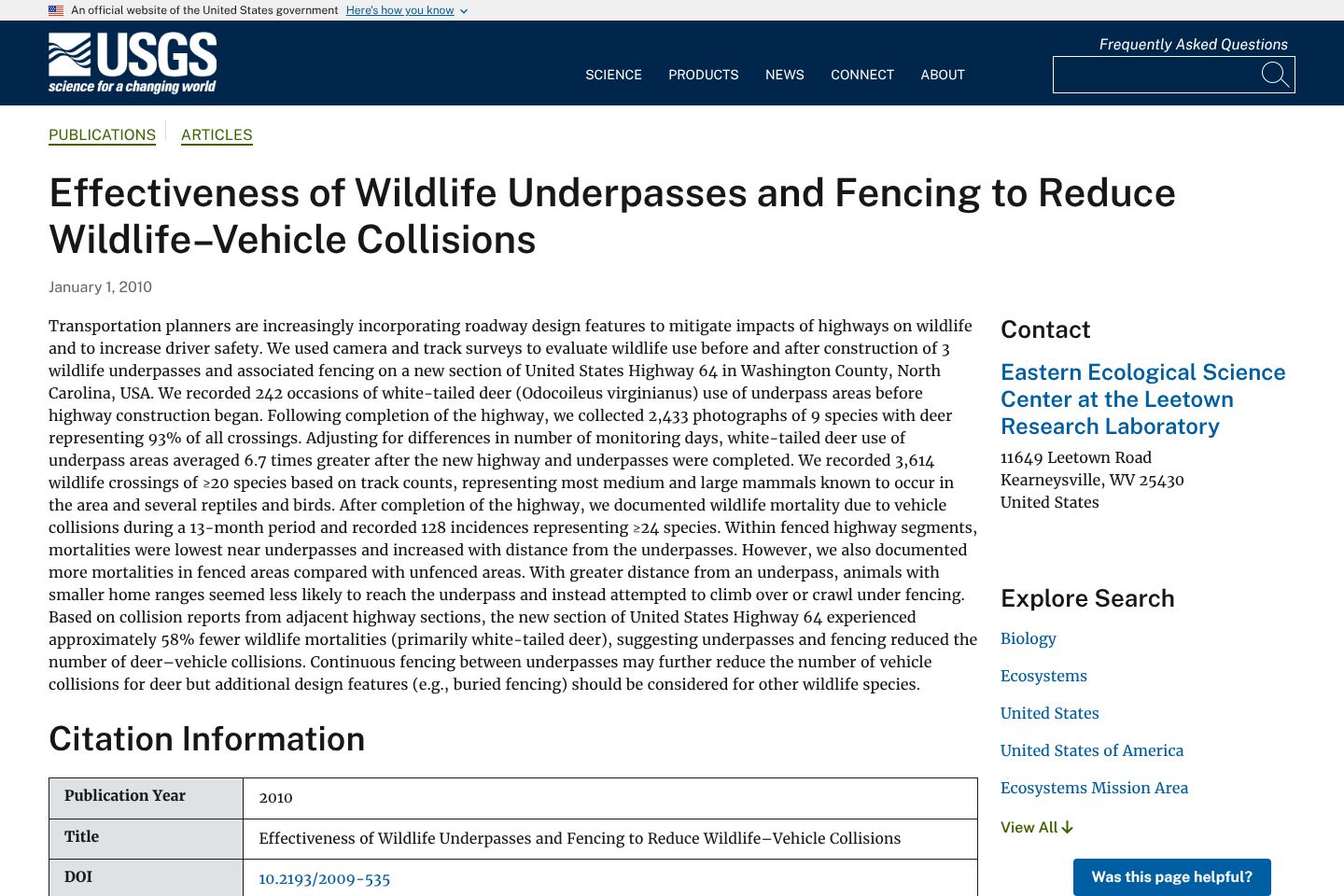
USGS highlights effectiveness of underpasses with fencing for reducing wildlife-vehicle collisions (USGS underpasses and fencing).
-
Wyoming mule deer work showed large collision drops with underpasses and continuous fencing (Sawyer et al. WSB underpasses; Nugget Canyon evaluation).
-
Gaps in fencing can erase much of the safety gain - maintenance is part of the biology (FHWA wildlife-vehicle collision study).
-
Hunters should remap travel funnels after a project opens; old highway crossings may go dead while structure approaches become new dusk corridors (USGS underpasses and fencing; Sawyer et al. WSB underpasses).
What the structures are for
Primary goals are motorist safety and habitat connectivity, not hunter convenience (FHWA wildlife-vehicle collision study; USGS underpasses and fencing). Deer follow fence lines to overpasses or underpasses instead of sprinting across lanes. That is a win for crash stats even if your old stand on a shoulder trail goes quiet.
Evidence of collision reduction
FHWA’s report to Congress on wildlife-vehicle collisions summarizes large percentage reductions for fenced crossing systems (FHWA wildlife-vehicle collision study). USGS publication pages on underpass-and-fence projects echo effectiveness findings (USGS underpasses and fencing). Sawyer and colleagues documented strong results for migratory mule deer using underpasses with continuous fencing (Sawyer et al. WSB underpasses). Nugget Canyon evaluations add site detail on crossing use (Nugget Canyon evaluation).
Why fencing is the unglamorous hero
An overpass without fence is expensive art. Deer still choose the shortest path across pavement if the shoulder is open. FHWA and field studies stress continuous, maintained fencing to the structure (FHWA wildlife-vehicle collision study; Sawyer et al. WSB underpasses). Hunters who cut fence for access recreate crash risk and may face serious legal trouble.
Hunting pattern changes to expect
Approaches to structures become pinch points. Public parcels that include those approaches can see increased trail use - by deer and by hunters (USGS underpasses and fencing; Sawyer et al. WSB underpasses). Parcels that depended on an unfenced highway crossing for evening movement may lose that traffic overnight when the fence closes.
Rebuild your map with a season of cameras on both sides of the right-of-way. Do not trust pre-project memory (Nugget Canyon evaluation; FHWA wildlife-vehicle collision study).
Access and safety ethics
Stay out of the highway right-of-way unless a hunt program explicitly allows it. Shooting toward traffic, retrieving across lanes, or parking on shoulders are how wildlife projects earn enemies (FHWA wildlife-vehicle collision study). Use legal access points and treat fence gates as agency property.
What not to claim on social media
Crossing structures do not “ruin hunting” statewide. They reallocate local movement. Claiming a single overpass destroyed a county herd ignores recruitment, harvest, and habitat data (USGS underpasses and fencing; Sawyer et al. WSB underpasses). Ask for the crash-reduction numbers and the new path data before posting an autopsy of your stand.
Bottom line
Overpasses and underpasses work for crash reduction when fencing funnels deer; hunters must remap funnels rather than mourn old road crossings (FHWA wildlife-vehicle collision study; USGS underpasses and fencing; Sawyer et al. WSB underpasses; Nugget Canyon evaluation).
Remapping a lease after a highway project
Walk both fence lines with a GPS track the week the project opens. Mark gates, jump-outs, and structure mouths. Place cameras for thirty nights before you judge the new normal (FHWA wildlife-vehicle collision study; USGS underpasses and fencing; Sawyer et al. WSB underpasses).
Expect a transition year when deer test the fence. Some will pace and turn back; some will find the structure quickly, as Wyoming underpass studies showed for migratory mule deer (Sawyer et al. WSB underpasses; Nugget Canyon evaluation). Whitetails in fragmented Midwest landscapes learn local fence geometry the same way - by trial.
Why hunters should support maintenance budgets
A washed-out fence panel becomes an at-grade crossing again and can erase crash-reduction gains FHWA associates with complete systems (FHWA wildlife-vehicle collision study). Report gaps to the responsible DOT office. Cutting fence for a drag path is vandalism against a safety project (USGS underpasses and fencing).
Clubs that adopt a nearby structure approach as a hunt zone should adopt a stewardship rule: pack out trash, stay off the travel lanes, and leave jump-outs alone (Nugget Canyon evaluation; Sawyer et al. WSB underpasses).
Opportunity, not entitlement
Crossing structures can create excellent evening funnels on public land that includes the approach. They can also concentrate hunters. Arrive earlier, hunt midweek, and treat the pinch point like a popular river crossing - because that is what it is (USGS underpasses and fencing; FHWA wildlife-vehicle collision study).
If private land seals both approaches, the structure still serves cars and connectivity even when it does not serve your tag. That outcome is not a project failure (Sawyer et al. WSB underpasses).
Related: Airport deer hazards and Whitetail home range size.
The other side of it
The crash-reduction evidence is strong, but the hunting predictions are a lot softer. The best-documented crossing behavior here comes from migratory mule deer in Wyoming, and the idea that fragmented Midwest whitetails learn fence geometry the same way is a reasonable guess rather than something these studies measured. Until you have a season of your own camera data from both sides of the right-of-way, treat any new funnel as a theory.
Keep reading
Latest deer news
Sources
- Chapter 8 - Wildlife-Vehicle Collision Reduction Study: Report To Congress, August 2008 - FHWA-HRT-08-034
- Effectiveness of Wildlife Underpasses and Fencing to Reduce Wildlife–Vehicle Collisions | U.S. Geological Survey
- Mitigating roadway impacts to migratory mule deer—A case study with underpasses and continuous fencing
- Nugget Canyon evaluation (rosap.ntl.bts.gov)
Comments