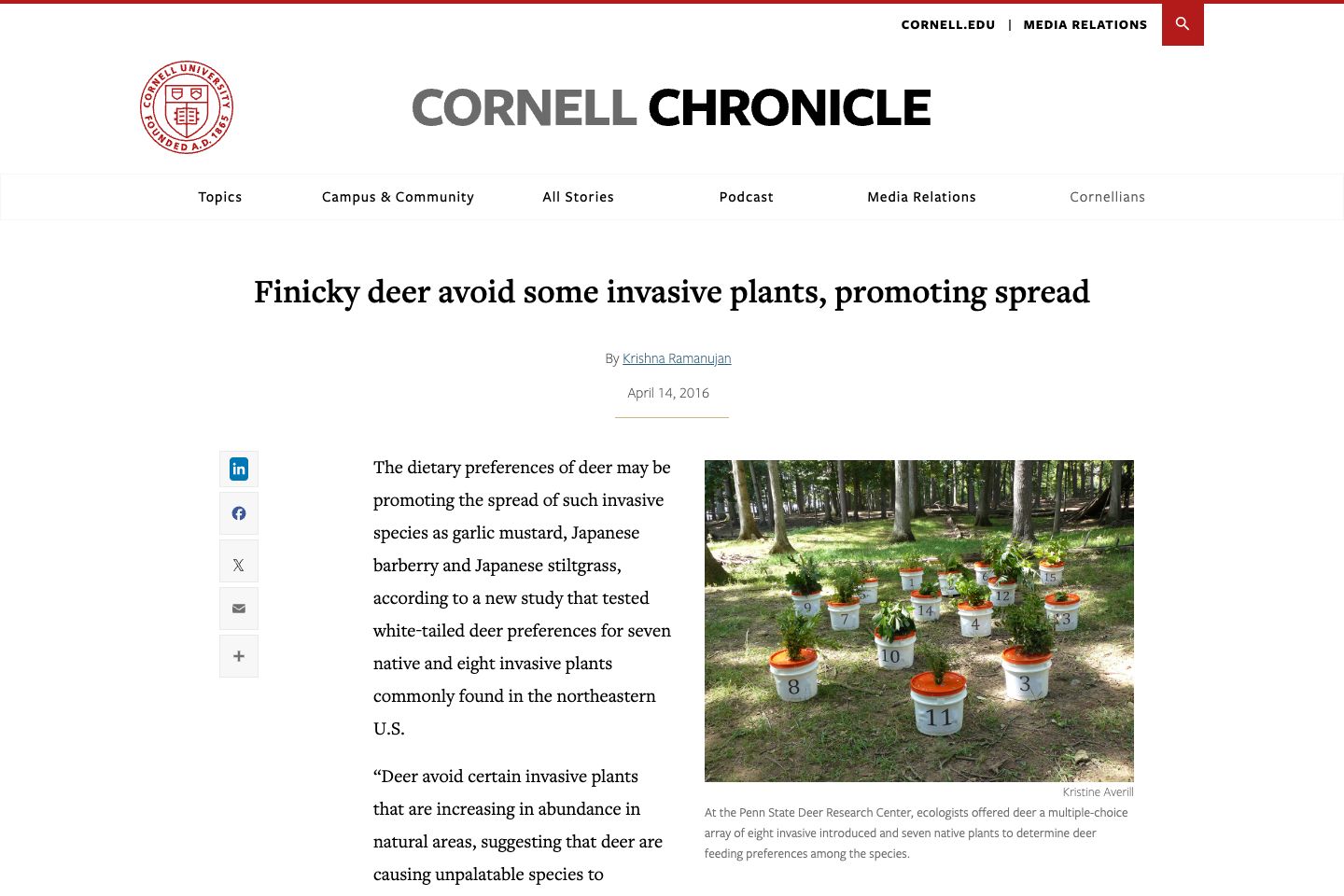
When deer can choose freely, preference rankings separate plants that disappear first from plants that sit untouched. Texas A&M AgriLife Extension ranks woody plants, vines, and cactus for South Texas and the Edwards Plateau into High, Moderate, Low, and Least Used classes because availability and competing livestock browse change what shows up on the landscape (Texas A&M AgriLife Extension). A Cornell cafeteria trial offered eight mature does 15 native and invasive species in pots simultaneously across late summer, early autumn, and spring and measured consumption with infrared cameras (Cornell Chronicle). University of Missouri Extension separately lists preferred woody browse for Midwestern herds (MU Extension G9487).
Key Takeaways
- AgriLife ranks Edwards Plateau/South Texas woody plants into High, Moderate, Low, Least Used (Texas A&M AgriLife Extension).
- High-preference plants are often scarce because livestock and deer already hammer them (Texas A&M AgriLife Extension).
- Cornell cafeteria trial: 8 does, 15 species in pots, three seasons, camera-logged intake (Cornell Chronicle).
- Deer preferred some invasives (Oriental bittersweet, privet, Morrow’s honeysuckle) and natives (Virginia creeper, red maple) (Cornell Chronicle).
- MU preferred woody browse includes dogwood, grape, greenbrier, sumac, blackberry, and oaks (MU Extension G9487).
How AgriLife built the Texas ranks
Wright, Lyons, Cathey, and Cooper note that browse is often the most stable year-round food when forbs and mast swing with weather (Texas A&M AgriLife Extension). High-preference plants are usually in short supply and may be absent from heavily browsed ranches (Texas A&M AgriLife Extension). Moderate plants are eaten readily but are less magnetic than the High group; heavy early-summer use of Moderate plants can signal High plants are already depleted (Texas A&M AgriLife Extension). Low-preference plants enter diets after better forage disappears - live oak sits in the Low group on the Edwards Plateau yet still fills diets because it stays green year-round (Texas A&M AgriLife Extension).
Named High versus Least Used examples
Edwards Plateau High examples include kidneywood, Texas oak, rusty blackhaw, mountain mahogany, mistletoe, and white honeysuckle (Texas A&M AgriLife Extension). Least Used examples include juniper (cedar), guajillo, honey mesquite, agarito, and prickly pear - plants that persist under browse pressure for chemical or physical defenses (Texas A&M AgriLife Extension). Moderate and Low columns fill the middle with species such as hackberry, grape, greenbriar, elm, live oak, and shin oak (Texas A&M AgriLife Extension). Rankings can differ from other publications when local availability changes (Texas A&M AgriLife Extension).
What a true cafeteria trial adds
Cornell researchers offered seven native and eight invasive northeastern plants to eight mature does without fawns across three seasons, each species available at once in pots (Cornell Chronicle). Motion/infrared cameras recorded behavior and researchers measured plant consumption (Cornell Chronicle). Deer favored Oriental bittersweet, common privet, and Morrow’s honeysuckle among invasives, plus native Virginia creeper and red maple, while avoiding garlic mustard, Japanese barberry, Japanese stiltgrass, and native hay-scented fern (Cornell Chronicle). Within the sampled set they favored natives overall, yet avoided unpalatable invasives that then increase in the understory (Cornell Chronicle).
Midwest preferred-browse lists
MU Extension’s preferred woody browse list includes blackberry, blueberry, dogwood, elderberry, elms, grapes, greenbrier, maples, oaks, persimmon, sassafras, serviceberry, sumacs, viburnum, and Virginia creeper (MU Extension G9487). That list sits beside preferred forbs and mast species and underpins the same publication’s seasonal protein targets (MU Extension G9487). Landowners should not transplant Texas High plants into Missouri or Cornell invasives into Texas - use regional ranks (Texas A&M AgriLife Extension; MU Extension G9487).
Management reading of preference
If High plants are missing, expect deer to lean harder on Moderate and Low species and on agricultural forage (Texas A&M AgriLife Extension). Restoring kidneywood or other High shrubs where appropriate can raise diet quality faster than planting only Least Used cover (Texas A&M AgriLife Extension). In the Northeast, protecting preferred natives while recognizing that deer can also prefer certain invasives clarifies why some weeds explode when browse pressure is high (Cornell Chronicle).
Bottom line
Equal-access trials and regional extension ranks show deer hit High plants first, ignore defended Least Used species, and can prefer some invasives - so plant and scout from local preference tables, not folklore (Texas A&M AgriLife Extension; Cornell Chronicle; MU Extension G9487).
The other side of it
Eight does picking from potted plants is a clean experiment and a strange way to eat. Wild deer don’t get every species served at once, and AgriLife’s own ranks admit that local availability can reshuffle the order. A table tells you what deer would take off a full menu, which is not always what your woods are serving. Of course, the hunter who’s sure his deer prefer whatever he just bought seed for never needed a table anyway.
Keep reading
Latest deer news
Comments