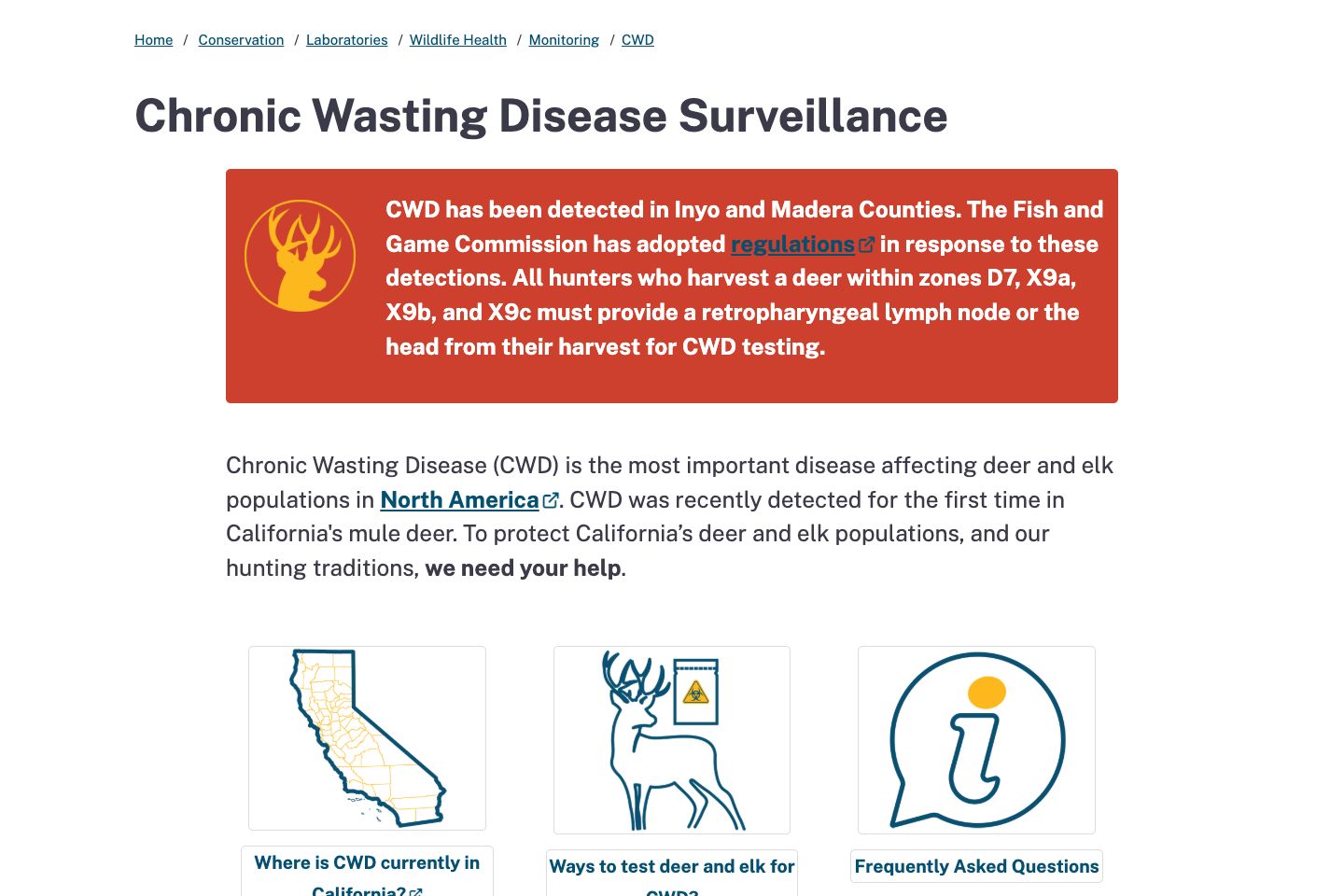
Chronic wasting disease has been detected in California mule deer, including confirmed cases tied to Inyo and Madera Counties, and CDFW requires hunters who harvest deer in zones D7, X9a, X9b, and X9c to provide a retropharyngeal lymph node or the head for testing (CDFW CWD). Separately, CCR Title 14 Section 712 limits which cervid parts hunters may bring into California from out-of-state hunts - remembered as “no brain and no spinal cord” (CDFW CWD; CDFW deer hunting). These rules protect blacktail and mule deer herds statewide.
Key Takeaways
- Mandatory CWD sampling for deer harvested in D7, X9a, X9b, and X9c (CDFW CWD).
- Import allowed parts: boned meat without spinal column/brain/head attached, hides/capes without skull, clean skull plates with antlers, antlers without tissue, finished mounts, upper canines (CDFW CWD).
- Baiting wildlife and possessing cervid urine scent lures are banned (CDFW CWD).
- Declare imported game on CDFW’s Declaration for Entry form, within 24 hours if a checkpoint is unmanned (CDFW CWD).
- California deer species covered here are mule deer and black-tailed deer (CDFW deer conservation).
Mandatory sampling zones
All hunters who harvest a deer within zones D7, X9a, X9b, and X9c must provide a retropharyngeal lymph node or the head for CWD testing (CDFW CWD). Use a CDFW sampling station or office, a participating processor or taxidermist, or self-collect following CDFW instructions (CDFW CWD). Results are looked up by document number, GO ID, or sample bag number, with published wait times on the CWD page (CDFW CWD).
Import parts list under Section 712
It is unlawful to import or possess hunter-harvested deer or elk carcasses or parts into California except: portions of meat with no spinal column, brain, or head attached (other bones such as legs and shoulders may be attached); hides and capes with no spinal column, brain, or head; clean skull plates with antlers and no brain tissue; antlers with no meat or tissue (velvet allowed if clean); finished taxidermy mounts; and upper canine teeth (CDFW CWD). Best practice is packaged or boned-out meat and finished mounts only (CDFW CWD).
Border declaration
Any harvested animal or parts brought into California must be declared using CDFW’s Declaration/Importation of Fish and Wildlife entry form. If the checkpoint is closed or unmanned, submit the form within 24 hours after entering the state (CDFW CWD). Bring the animal into Section 712 compliance in the state where you hunted whenever possible.
Field handling to limit spread
Field dress and leave brain and spinal cord at the harvest site when you can. If taking a head for sampling or taxidermy, ensure brain tissue is incinerated or disposed of at a landfill that accepts animal waste (CDFW CWD). Wear gloves while processing and disinfect tools afterward (CDFW CWD).
Bait and urine bans
Baits artificially congregate wildlife and raise disease risk, which is why California bans baiting wildlife (CDFW CWD). Deer urine and other biologically based lures may not be possessed; captive-deer urine can carry prions that persist more than ten years (CDFW CWD).
Positive out-of-state tests
If an out-of-state animal tests positive, CDFW recommends contacting the Department and voluntarily relinquishing meat or parts for incineration. CDC and WHO advise against eating CWD-positive tissues (CDFW CWD). Do not bury, trash, scavenge-feed, or dog-feed potentially contaminated meat (CDFW CWD).
Surveillance context
California has tested deer and elk for CWD since 1999. First confirmations arrived in 2024, and the Fish and Game Commission adopted management-zone rules authorizing mandatory testing in designated zones (CDFW CWD). Report sick or dead deer that appear wasted or neurologically abnormal through CDFW’s mortality form or the Wildlife Health Lab at (916) 358-2790 (CDFW CWD).
License and tag still apply
CWD duties do not replace hunting licenses, deer tags, or harvest reporting for mule deer and blacktail tags (CDFW license items and fees; CDFW deer hunting).
Official digest checks
Open https://wildlife.ca.gov/Conservation/Laboratories/Wildlife-Health/Monitoring/CWD and screenshot the mandatory zones and Section 712 parts list. Cross-check your zone PDF on https://wildlife.ca.gov/Hunting/Deer before the opener.
Human health guidance CDFW repeats
There are no documented human CWD cases, but CDC and WHO recommend not eating meat from CWD-positive or clinically sick deer (CDFW CWD). CDFW recommends waiting for a negative test before consuming animals from known positive areas when practical, noting tests often take three weeks or more (CDFW CWD).
Captive cervid and live-animal import bans
Legislation and regulations since the 1990s restrict importing captive deer and elk into California and limit what hunters can bring from out-of-state hunts (CDFW CWD). Those live-animal rules sit beside Section 712 carcass rules for hunters returning with mule deer or elk meat.
Field notes
List mandatory zones D7/X9a/X9b/X9c, Section 712 allowed parts, declaration form duty, no bait, no natural urine lures, and Wildlife Health Lab (916) 358-2790 (CDFW CWD). Tape it inside the cooler lid on multi-state trips.
Taxidermy path for out-of-state heads
To European-mount an out-of-state deer, remove residual brain matter and skull lining so the skull plate meets Section 712 before entering California (CDFW CWD). Hides and capes cannot travel with skull or spinal column attached (CDFW CWD).
Bottom line
California CWD rules for mule deer and blacktail hunters mean mandatory sampling in listed zones, strict import parts limits with declaration, and statewide bans on bait and natural cervid urine lures (CDFW CWD).
Related: California Deer Hunting License Cost and Requirements | California Legal Deer Rifles and Calibers | California Public Land Deer Hunting Map Guide
The other side of it
The legal import list is looser than the advice wrapped around it. Section 712 lets meat come in with leg and shoulder bones still attached, while CDFW’s own best practice is boned-out meat and finished mounts only, so following the law and following the advice aren’t quite the same trip home. The mandatory sampling zones are also new, coming after the first confirmations in 2024, and a list that young is one to recheck before every opener.
Keep reading
Latest deer news
Comments