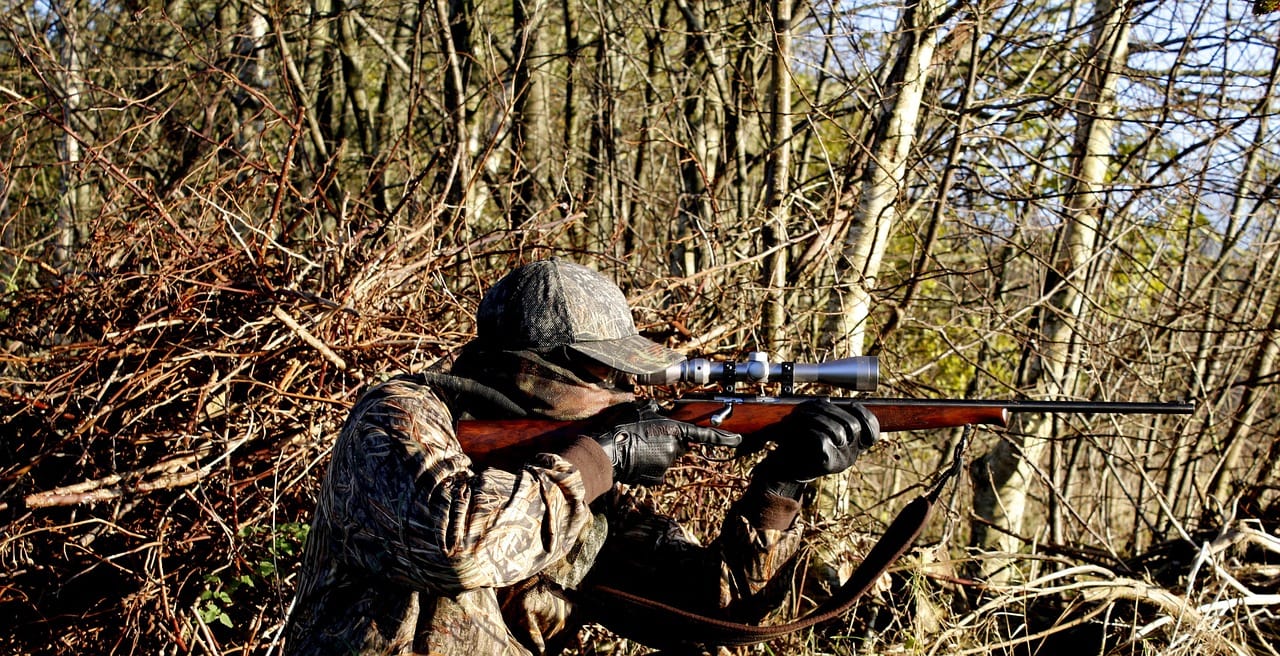
What is the best rifle scope? There isn’t one answer, and the people who test them say so. Outdoor Life’s deer-scope guide puts it this way: “the best riflescope for deer hunting really depends on where, and how, you intend to hunt” (Outdoor Life). That said, Outdoor Life’s 2026 optics tests did crown winners, and the buying basics are well settled. Here are both.
Picks checked November 2026 against Outdoor Life’s 2026 test results. Prices are as reported by Outdoor Life.
Key Takeaways
- Outdoor Life’s 2026 top hunting scope: Bushnell R7 4-20x50 FFP.
- Its Great Buy: Burris Fullfield 3-12x42, about $260.
- Match magnification to your shots. Leupold suggests low power for timber, more range for open country.
- American Hunter’s Aaron Carter says a 40 to 44 mm objective “is all that is needed.”
- Most hunting scopes put the reticle in the second focal plane.
What is the best rifle scope in 2026 tests?
Outdoor Life says its team tested “hunting scopes, LPVOs, thermal scopes, and precision scopes,” checking “lowlight capability, tracking, ergonomics, overall shoot-ability,” and “we even drop tested them” (Outdoor Life 2026 winners). Its award list includes:
- Top Hunting Scope: Bushnell R7 4-20x50 FFP. Outdoor Life named it “the best overall hunting scope in the field of 25 excellent competitors” and says “The price, at about $950, is fair.” The scope passed the drop test: “We dropped the scope three times from three feet on concrete covered by a 2-inch pad, and the Bushnell retained its zero.”
- Great Buy Hunting Scope: Burris Fullfield 3-12x42 SFP Plex. Pros include “At about $260, priced right,” and Outdoor Life says it “might be the perfect deer-hunting scope in our test of nearly 25 hunting scopes.”
- Best High End Hunting Scope: Nightforce NX6 3-18x50 F1, which Alex Robinson called “an excellent open-country hunting scope.”
The deer-specific guide picks the same Burris for best value and the same Nightforce for best high end. Its conclusion: “The best deer scope is functional, reliable, and simple. Hopefully, it’s affordable too.”
How to choose a rifle scope
Start with how you hunt
Leupold says “the first thing to consider is what kind of hunting you’ll be doing.” For open country, “a scope with a larger magnification range like 4-12 or 3-18 provides excellent versatility.” In thick timber, “the lower end of the magnification range may be more important” (Leupold).
Magnification
Aaron Carter at American Hunter writes that “Proper magnification is highly subjective.” Of the classic 3-9X, he says “It still reigns supreme in the minds of most shooters,” and that “low-magnification models (such as 1-4X) are perfectly capable for hunting where shot distances are short” (American Hunter). Leupold explains zoom ratio using its 3:1 and 4:1 scope lines, where “the top end magnification will always be 3 or 4 times the bottom end” magnification.
Objective lens
Carter says “40-mm and 50-mm sizes dominate the marketplace,” and that larger objectives require mounting “higher than normal.” His bottom line: “an objective lens measuring 40 mm to 44 mm is all that is needed.” He also warns, “Don’t compensate for low-quality glass and/or insufficient lens coatings by selecting a larger objective lens.”
Glass and build
Carter writes that with glass, “you get what you pay for.” He suggests looking for “extra-low-dispersion glass” because “it minimizes chromatic aberration,” and says to “ensure that the lenses are fully multi-coated for maximum brightness and light transmission.” On build, “you want the optic to be nitrogen or argon purged to displace water vapor and thus eliminate internal fogging,” and “The riflescope needs to be waterproof and shock proof as well.” Outdoor Life’s drop test is one way to check that last point before you buy.
Reticle and focal plane
Carter says a standard Duplex reticle “is sufficient for most hunting arms, ranges and conditions.” On focal plane: a first-focal-plane reticle’s “scale in proportion to the image is unchanged through the entire magnification range,” which “permits accurate ranging, holdovers, and windage corrections at all magnification settings.” With second focal plane, “a specific magnification setting must be used for accurate ranging and holdover.” He notes that “where legal an illuminated reticle can help improve sighting in low-light conditions,” so check your state’s rules first. He adds, “By far, the most prevalent and least costly riflescopes have the reticle in the second focal plane.”
Turrets
For dialing turrets, Carter says to make sure “there’s a true return-to-zero feature.” For more, see riflescope turret and zero stop specs.
FAQ
What is the best rifle scope for deer? Outdoor Life’s deer guide picks the Burris Fullfield 3-12x42 for value and the Nightforce NX6 3-18x50 for high end.
What magnification do I need? American Hunter says 3-9X has long been the all-around choice; Leupold says timber hunters should prioritize low power.
Is a bigger objective better? Not always. American Hunter says 40 to 44 mm is enough.
For rifle basics, see deer rifle hunting.
The other side of it
Some hunters say you should spend as much on the scope as on the rifle, and that a cheap scope will cost you a deer. There’s truth there, and Carter himself says “you get what you pay for” with glass. But Outdoor Life’s own Great Buy is a $260 scope that it says checks nearly every box. The hunter with a 4-24x scope on a rifle he only shoots at 80 yards in the timber has bought a lot of magnification he’ll never use.
Keep reading
Latest deer news
Sources
- The 12 Best Riflescopes We Tested this Year (Andrew McKean, Nov. 6, 2026), Outdoor Life
- The Best Rifle Scopes for Deer Hunting, Tested and Reviewed (Alex Robinson, Andrew McKean, Oct. 28, 2026), Outdoor Life
- How To Choose A Hunting Scope (Feb. 11, 2026), Leupold
- How to Choose a Riflescope (Aaron Carter, July 25, 2016), American Hunter (NRA)
Comments