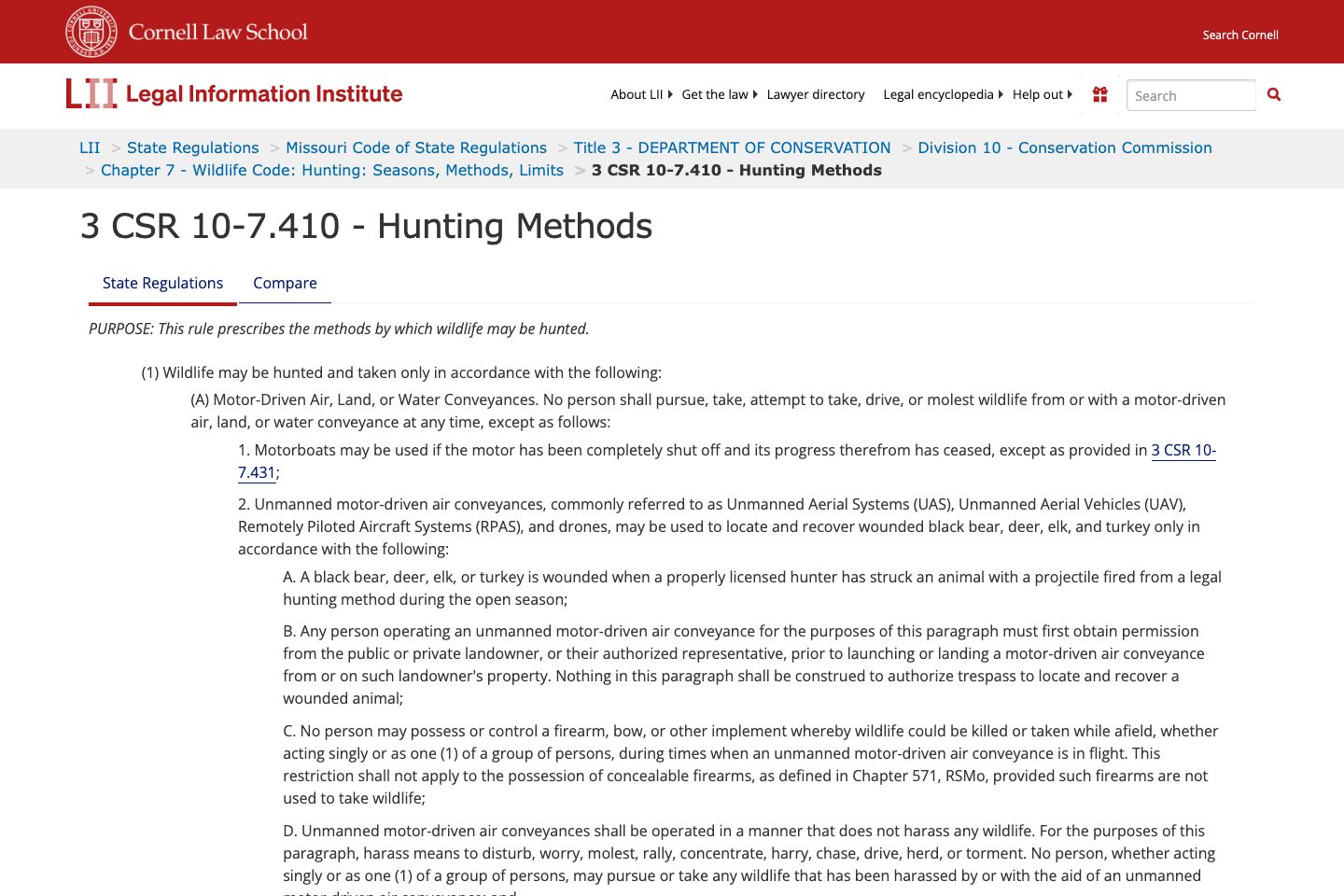
Thermal optics detect body heat. Whether you may use them on deer depends on the legal verb: take (hunting) versus recovery of an animal already legally hit. Night lighted take of deer is widely banned, as in Texas Parks and Wildlife Code 62.005, while some states allow lights or optics only after a hit under tight conditions, and others fold tracking into “hunting” so thermal remains barred (Texas PW 62.005; Missouri 3 CSR 10-7.410; TPWD Means and Methods).
Key Takeaways
- Taking deer with artificial light that illuminates the animal is illegal in Texas; disability laser exceptions are not a night season (Texas PW 62.005; TPWD Means and Methods).
- Thermal aiming devices for live deer after hours inherit the same night-take prohibitions that govern lights in most deer states (Sightmark thermal legality overview).
- Recovery rules are state-specific: some allow illumination to find a downed animal with firearms cased or unloaded; others treat any pursuit as hunting under methods codes such as Missouri’s (Missouri 3 CSR 10-7.410).
- Tracking dogs and drones are separate recovery tools with their own statutes; thermal does not automatically piggyback on those permissions (Virginia tracking carve-out pattern).
- Damage-permit culls may use thermal at night under agency authorization recreational hunters lack (NYSDEC CBDM; Ann Arbor 2016 program).
Take versus recovery in plain language
Take means pursuing, shooting, or capturing live game under hunting methods rules. Recovery means locating an animal you already wounded or killed under a legal shot. Agencies write light and electronic-aid rules primarily around take. When digests are silent on recovery exceptions, wardens may still cite hunters who walk with a loaded rifle and a thermal monocular after dark because that looks like continued hunting (Missouri 3 CSR 10-7.410; Texas PW 62.005).
Night take remains the bright line
Texas forbids hunting with artificial light that illuminates wildlife, a statute aimed at spotlighting deer from roads and fields (Texas PW 62.005). Commercial legality summaries list night deer hunting as illegal across Texas, Louisiana, and Florida even when thermal hardware is marketed for hogs (Sightmark thermal legality overview). Mounting a thermal scope for a midnight deer sit is take, not recovery. Hog-night authorizations do not convert into deer tags after dark (Louisiana quadrupeds regulations).
How to argue recovery correctly
If your state allows lights for blood trailing, follow the exact conditions: weapon unloaded or cased, landowner permission, and sometimes a time window. Mark the hit site at the shot, wait the recommended interval, then search with a handheld thermal or light without reverting to still-hunting live deer. When thermal is illegal even for recovery, wait for legal light or call a permitted tracking-dog handler (Virginia 4VAC15-90-260 tracking exception). Missouri hunters should read 3 CSR 10-7.410 hunting methods before assuming any electronic optic is recovery-legal (Missouri 3 CSR 10-7.410).
Parallel tools: dogs and aircraft
Virginia and other states carve tracking dogs out of dog-deer bans specifically for recovery (Virginia 4VAC15-90-260). Drone recovery laws are changing separately and often ban aircraft during open seasons regardless of thermal payloads. Do not assume a dog permit or a neighbor’s drone story legalizes your thermal rifle scan. Each tool needs its own digest line.
Cull programs are not your template
USDA and municipal sharpshooters use thermal and night vision under damage permits with closed parks and trained staff (Ann Arbor 2016 program; NYSDEC CBDM). Recreational license holders cannot copy those methods without the same written authorization. Seeing a night cull on the news is not a season proclamation.
Field protocol that stays defensible
Document shot time, hit location, and blood evidence. Case the firearm if recovery-only rules require it. Use a handheld monocular rather than a scoped rifle when searching. Stop if you jump live unhit deer and wait for legal hours. Call the regional warden tip line if regulations are ambiguous before you walk.
Bottom line
Thermal for shooting live deer at night is almost always illegal take; thermal for finding a deer you already legally hit is a separate, state-written recovery question that may still be closed (Texas PW 62.005; Missouri 3 CSR 10-7.410). Read both verbs before you power on the optic.
Related: Tracking and recovery hub and Trail cam buyer’s guide.
Questions to ask your agency in one call
Call or email before season and ask three precise questions: (1) May I use a thermal monocular or scope to search for a deer I have already legally shot after legal hours? (2) Must the firearm be unloaded, cased, or left at the vehicle during that search? (3) Does “artificial light” language in the digest include infrared or thermal devices by policy? Write down the date, employee name, and answer. Compare that answer to the published means chapter such as Texas PW 62.005 and Missouri 3 CSR 10-7.410 so you are not relying on memory alone (Texas PW 62.005; Missouri 3 CSR 10-7.410; TPWD Means and Methods).
Marginal cases that create citations
Scanning bedding cover “just to see if anything is wounded,” glassing a food plot after last light with a rifle still loaded, or switching from hog-legal thermal to a deer when a whitetail appears are take scenarios dressed up as recovery (Sightmark thermal legality overview; Louisiana quadrupeds regulations). If you did not hit a deer during legal hours, you do not have a recovery. If you did hit one, stay on the blood and marked grid instead of freelancing new ridges with a heat scope.
The other side of it
The shaky part is the advice to call your agency. A phone answer from one employee isn’t the published rule, and a warden who finds a hunter with a heat scope after dark may not care what somebody at the office said. Commercial legality summaries like the one cited here aren’t law either. And the fella whose “wounded deer check” somehow covers new ridges and a food plot every night isn’t tracking anything but an excuse.
Keep reading
Latest deer news
Sources
- Texas Constitution and Statutes
- 3 CSR 10-7.410 - Hunting Methods | State Regulations | US Law | LII / Legal Information Institute
- Hunting Means and Methods — Texas Parks & Wildlife Department
- Thermal Legality by State – Sightmark
- 4VAC15-90-260. Hunting with dogs prohibited in certain counties and areas.
- NYSDEC CBDM (dec.ny.gov)
- 2016 Program | City of Ann Arbor
- Quadrupeds & Resident Game Birds Regulations - Louisiana Hunting | eRegulations
Comments