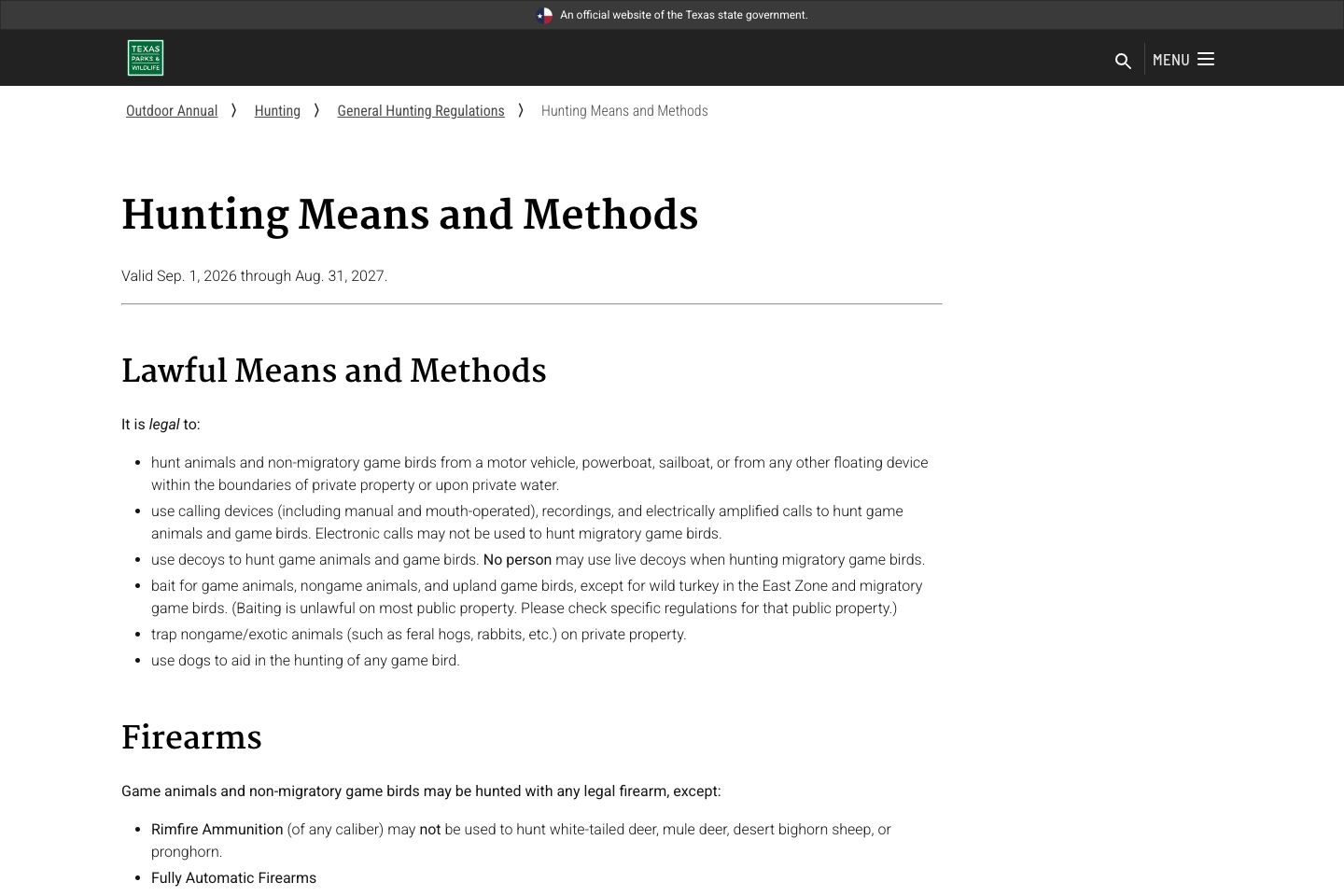
For free-ranging whitetails under normal recreational seasons, night hunting with artificial light or thermal aiming devices is broadly illegal. Texas Parks and Wildlife Code section 62.005 is the classic formulation: hunting with artificial light that illuminates the animal is prohibited, with narrow disability laser-sight exceptions (Texas PW 62.005; TPWD Means and Methods). Night work that people confuse with “deer hunting” is usually feral hog or outlaw-quadruped take on private land, or agency damage culls, not a lighted whitetail season (Louisiana quadrupeds regulations; NYSDEC CBDM).
Key Takeaways
- Recreational night take of deer with lights or thermal aiming is illegal in major deer states such as Texas; thermal gear does not create a deer exception (Texas PW 62.005; TPWD Means and Methods).
- Feral hogs and other outlaw quadrupeds may be night-hunted on private land under separate rules (Louisiana written permission and sheriff notice patterns are one example) while deer remain day-only (Louisiana quadrupeds regulations).
- Professional urban culls under damage permits often use night shooting and thermal imaging; that is authorized control, not a public season (Ann Arbor 2016 program; NYSDEC CBDM).
- Florida is tightening night-vision and thermal device rules for night work outside authorized contexts; check FWC rule language before private-land hog nights (FWC Rule 68A-4.002).
- Disability laser sights that help legally blind or permanently disabled hunters aim in legal light are not a general night-hunting license (Texas PW 62.005).
Artificial light statutes
Texas PW 62.005 makes it unlawful to hunt protected wildlife with artificial light that illuminates the animal, covering vehicle headlights and other lamps used to spotlight deer (Texas PW 62.005). TPWD’s means-and-methods digest restates the light ban and points hunters to the disability laser exceptions rather than night seasons (TPWD Means and Methods). Similar lighted-deer bans appear across eastern deer states; if a digest is silent, assume closed until an explicit night deer season appears in regulation.
Thermal and night vision versus deer seasons
Thermal monoculars and scopes detect heat without a visible beam, which tempts hunters to treat them as loopholes. State hunting-method codes usually regulate night take and electronic or optic aids separately from flashlight bans. Missouri’s hunting methods regulation is one example of detailed means controls that hunters must read before mounting thermal aiming devices for deer (Missouri 3 CSR 10-7.410). Commercial legality charts emphasize that night deer hunting stays illegal in Texas, Louisiana, and Florida even when thermal hardware is sold openly (Sightmark thermal legality overview). Possession of a thermal optic is not the same as legal use for taking deer after hours.
Hogs, coyotes, and the confusion trap
Louisiana allows night hunting of outlaw quadrupeds including feral swine on private land with written landowner permission and required sheriff notification patterns described in the quadruped regulations (Louisiana quadrupeds regulations). Texas private-land hog nights are widely practiced under landowner permission frameworks distinct from deer seasons (night vision state law roundups). Mixing a legal hog night with an opportunistic deer shot is still a deer violation. Identify the species in legal light or under the specific night authorization that names that species.
Damage permits and USDA culls
Community deer management often authorizes night shooting that recreational hunters cannot copy. Ann Arbor’s USDA-APHIS cull used suppressed firearms in closed parks under a Michigan DNR special permit (Ann Arbor 2016 program). New York Deer Damage Permits can authorize baiting and night shooting by professionals or community agents when damage is occurring (NYSDEC CBDM). Those authorizations are written, site-limited, and usually closed to the general license holder.
Recovery after legal daytime shots
Using a light or thermal unit to find a deer you already legally hit can be treated differently from hunting, but many states still fold tracking into the definition of take or hunting. Confirm whether your state allows lights for recovery only, requires weapons to be cased, or bans thermal entirely after hours. When in doubt, mark the hit site, wait legal light, or call a permitted tracking-dog handler rather than inventing a night stalk (tracking and recovery hub context).
Bottom line
Night lighted or thermal harvest of recreational whitetails is almost never legal; hog nights, disability lasers, and damage-permit culls are different legal boxes (Texas PW 62.005; Louisiana quadrupeds regulations; NYSDEC CBDM). Read the species line, not the gear catalog.
Related: Tracking and recovery hub and Louisiana public land deer.
Practical verification steps
Open the current outdoor annual means-and-methods chapter and search for artificial light, night vision, thermal, and electronic calls separately (TPWD Means and Methods). If you lease land for hogs, keep deer tags out of the night truck and log sheriff notifications where Louisiana-style rules apply (Louisiana quadrupeds regulations). Municipal volunteers on damage permits should carry the permit copy and know closed-park times the way Ann Arbor published USDA windows (Ann Arbor 2016 program). Florida hunters watching FWC rule updates should note effective dates for night-vision device restrictions on private land outside WMAs (FWC Rule 68A-4.002). Social-media “legal in my state” claims are not a defense when the digest names deer as daylight-only.
Why agencies keep deer day-only
Spotlighting and thermal night take raise wounding, trespass, and public-safety risks that differ from managed hog control. Community cull programs mitigate those risks with trained marksmen, suppressed rifles, baited lanes, and temporary public closures (Ann Arbor 2016 program; NYSDEC CBDM). Recreational seasons keep legal shooting hours tied to sunrise and sunset tables so enforcement stays workable. Until a state publishes an explicit night deer season, treat heat signatures after dark as observation only.
The other side of it
The article’s net is wider than its catch. The statute it actually quotes is Texas, a couple of the state-by-state sources are retailer and gear-site roundups, and the recovery question gets handed back to your own state, which is where an honest hunter with a hit deer can genuinely get it wrong. Read your own digest line by line. And the guy whose thermal is strictly for hogs always seems to know exactly where the bucks bed.
Keep reading
Latest deer news
Sources
- Texas Constitution and Statutes
- Hunting Means and Methods — Texas Parks & Wildlife Department
- Quadrupeds & Resident Game Birds Regulations - Louisiana Hunting | eRegulations
- NYSDEC CBDM (dec.ny.gov)
- 2016 Program | City of Ann Arbor
- Hunting Rules Rule Language 68A-4.002
- 3 CSR 10-7.410 - Hunting Methods | State Regulations | US Law | LII / Legal Information Institute
- Thermal Legality by State – Sightmark
- Night Vision Laws by State 2026: What Hunters Need to Check Before Using NV or Thermal
- tracking and recovery hub context (deerassociation.com)
Comments