The .243 Winchester can be good for deer hunting, but it asks for stricter bullet and shot-angle discipline than larger deer cartridges. Deer-capable factory loads use heavy-for-caliber hunting bullets: Hornady Precision Hunter 90 grain ELD-X at 3,150 fps and Winchester Deer Season XP 95 grain Extreme Point at 3,100 fps (Hornady .243 ELD-X; Winchester Deer Season XP). SAAMI lists .243 Winchester at 60,000 psi maximum average pressure on a 24-inch test barrel (SAAMI Z299.4).
Key Takeaways
- The deer loads on maker pages are Hornady’s 90 grain ELD-X at 3,150 fps and Winchester’s 95 grain Extreme Point at 3,100 fps and 2,027 ft-lb (Hornady .243 ELD-X; Winchester Deer Season XP).
- Skip varmint bullets. Federal says the best varmint bullets have thin jackets that “fragment violently on impact” (Federal bullet guide).
- Stick to broadside or slight quartering-away shots, and pass on hard quartering-to and running shots through brush.
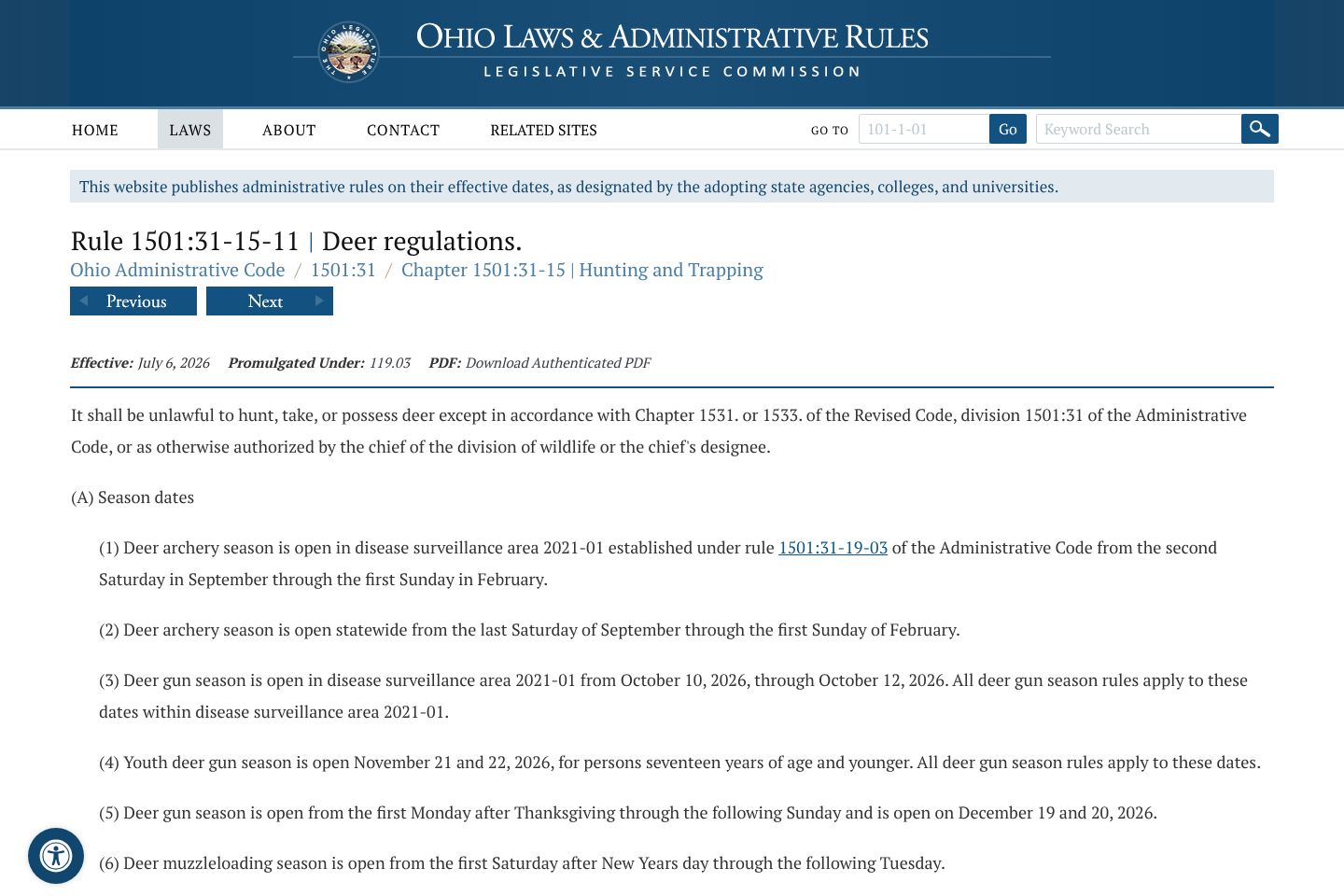
- The .243 is a bottleneck case, and some states don’t allow those for deer. Ohio’s rule bars necked-down rifle cartridges for deer hunting (Ohio Adm.Code 1501:31-15-11).
What .243 loads are built for deer?
| Load | Bullet | Velocity |
|---|---|---|
| Hornady Precision Hunter | 90 grain ELD-X | 3,150 fps (24-inch test barrel) |
| Winchester Deer Season XP | 95 grain Extreme Point | 3,100 fps (2,027 ft-lb muzzle energy) |
Sources: Hornady .243 ELD-X; Winchester Deer Season XP.
The ethical margin shrinks if you pick a varmint bullet. Federal describes those as thin-jacketed bullets that “fragment violently on impact” (Federal bullet guide). The lightest target or varmint loads that share the chamber stamp don’t belong in deer camp.
What’s the best .243 bullet weight for deer?
From the maker pages, 90 grain ELD-X (Hornady) or 95 grain Extreme Point (Winchester), not a generic “anything under 100 grains” (Hornady .243 ELD-X; Winchester Deer Season XP).
If your shop doesn’t carry those loads, look for another maker’s deer or medium-game label near 90 to 100 grains and check that maker’s published velocity before buying a case. If the only local ammo is varmint .243, order a deer-labeled load or move the new hunter to a .308 soft point.
What shots should you take on deer with a .243?
Pass on hard quartering-to shots and running shots through brush, and stick to broadside or slight quartering-away. Write a hard personal maximum yardage before opening day.
Keep the same 90 or 95 grain hunting load for practice and hunting. Tiny groups with a varmint load don’t count.
Is the .243 legal for deer everywhere?
No. Some states limit deer rifles to straight-wall cartridges. Ohio’s rule makes it unlawful to hunt deer with a necked-down rifle cartridge, which rules out the bottleneck .243 there (Ohio Adm.Code 1501:31-15-11). SAAMI’s 60,000 psi MAP confirms it’s a full commercial centerfire standard (SAAMI Z299.4), but wildlife regulations decide legality, and that rating doesn’t bless thin jackets. Read your state’s rules before investing in a rifle package.
Is the .243 a good deer rifle for a new hunter?
It can be, if the mentor keeps standards high. Use identical hunting ammo at the range, allow broadside or slight quartering-away shots only, and skip vanity long shots (Hornady .243 ELD-X; Winchester Deer Season XP).
If your state’s rules don’t allow it for deer, pick a cartridge that’s legal there instead of hoping a maker’s page overrides wildlife code.
The other side of it
The case against the .243 is mostly about margin. A cartridge that only behaves with the right 90 or 95 grain box on a broadside deer leaves little room for the shot that goes a little wrong, and a new hunter is the one most likely to make it. Every figure here is a muzzle number off a maker page, not a recovered bullet. Meanwhile some uncle is still handing his nephew the cheapest varmint box on the shelf and calling it a starter load.
Keep reading
Latest deer news
Comments