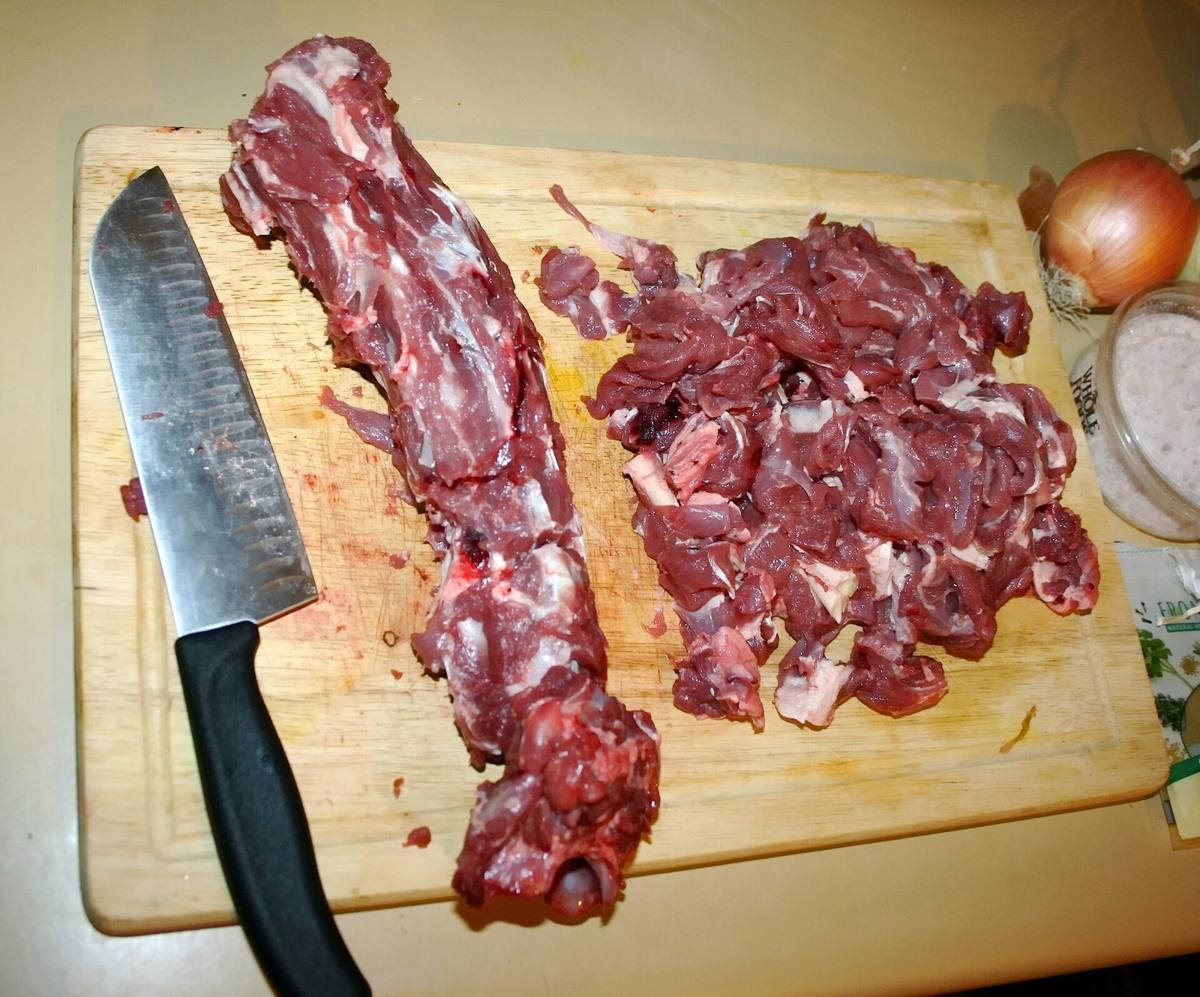
How to smoke venison backstrap well comes down to two choices: when you sear, and when you pull it off. Backstrap is lean and tender, so the goal is a smoky outside without drying out the middle. Two well-known wild-game recipes do it two ways. MeatEater’s Danielle Prewett sears first, then smokes at “200 to 225℉.” Field & Stream’s recipe smokes low, then sears hot (a reverse sear). One food-safety note up front: RAD’s house temperature for venison is 160°F, and the pull temperatures in these recipes are well below it, and below Penn State Extension’s 145°F figure for whole cuts. More on that below.
Key Takeaways
- Sear first (MeatEater): sear “about 30 seconds on each side,” then smoke “roughly 1 hour” to 128-132°F internal.
- Reverse sear (Field & Stream): smoke at 160, then 225, to 110 internal, then sear each side “for exactly 1 minute.”
- Use a probe thermometer. Both recipes pull by internal temperature, not time.
- RAD’s house temperature for venison is 160°F. Penn State Extension’s whole-cut figure is 145°F. Both are higher than these recipes’ pull temps.
Prep: pick the piece, trim, season
Choose an even piece. Prewett recommends “the centermost piece of the backstrap where the meat is about the same size in width and thickness so that it cooks evenly,” and saving the ends for stir-fry, kabobs or tacos.
Trim the silver skin. Field & Stream says to “trim away any silver skin or fascia.” Season ahead if you can. Prewett says to “cover tightly and refrigerate for at least 12 hours and up to a full day,” and notes that two days gives the meat a cured, deli-style flavor (MeatEater).
Prewett takes the meat out “for at least 30 minutes before you plan to cook,” then pats it dry before searing. Field & Stream goes the other way. It says that “Hot smoke is attracted to cold, wet meat,” and its recipe starts with partly frozen backstrap (Field & Stream). If you thaw first, Penn State Extension says to “Defrost frozen meat in the refrigerator, not on the kitchen counter” (Penn State Extension).
Method 1: Sear first, then smoke (MeatEater)
Prewett’s take: “sear the meat first over high heat to develop savoriness, then transfer to a low-temperature smoker to finish cooking.”
- Heat a skillet very hot with fat. Sear “about 30 seconds on each side until it’s golden brown on the outside.”
- Insert a probe. Smoke at “200 to 225℉.”
- Smoke “roughly 1 hour, or until the internal temperature reaches 128 to 132℉.” She notes “it will raise another couple of degrees while resting.”
- Rest “8 to 10 minutes, then slice and serve” (MeatEater).
Best for: a quick weeknight smoke.
Method 2: Reverse sear (Field & Stream)
Field & Stream explains that “A reverse sear simply means that you sear the outside of the meat after you’ve cooked the inside to the perfect level of doneness.”
- Put the backstrap on “a smoker or pellet grill set to 160 degrees” for a half hour.
- “Then raise the smoker or pellet grill to 225 and smoke for another hour and 10 minutes or until the internal temp reads 110 degrees.”
- Sear in a skillet “heated to 600 degrees,” or as hot as you can get it. “Sear each side for exactly 1 minute for a hearty crust.”
- “Rest for 10 to 15 minutes before carving” (Field & Stream).
Best for: the most control over doneness and a hard crust.
Which method should you pick?
| Sear first | Reverse sear | |
|---|---|---|
| Smoker temp | 200-225°F | 160°F, then 225°F |
| Pull temp | 128-132°F | 110°F before sear |
| Smoke time | About 1 hour | About 1 hour 40 min |
| Prep | 12-24 hr dry rub | Rub, partly frozen |
Why smoked backstrap comes out dry
Prewett says people ask her this a lot, and “the answer is usually because they set the smoker at too high of heat, didn’t season it ahead of time, or both.” Her salty rub works “sort of like a dry brine that keeps the meat juicy and will also help it absorb the smoke better.” She says if you season it for two days, you get a cured, deli-meat flavor that is good sliced thin and cold for sandwiches.
Wood matters less than heat. Prewett says “I love oak, but hickory, pecan, or cherry work too.”
What internal temperature is safe for smoked backstrap?
These are chef recipes, not food-safety guidance. RAD’s house temperature for venison is 160°F, following Penn State Extension’s canning and freezing guide: “Cook venison, including jerky, to a minimum internal temperature of 160°F to reduce the risk of food-borne illness” (Penn State Extension). Penn State Extension’s field-to-table guide gives a lower figure for whole cuts, saying to cook game “whole cuts, steaks, and roasts to 145°F (63°C) (medium rare)” (Penn State Extension). Both pull temps above are lower than either number. To follow RAD’s house number, let it reach 160°F. For a deeper look at smoking temps, see our guide to cold-smoking venison safety.
FAQ
What temperature do you smoke venison backstrap at? These recipes use 160 to 225°F.
How long does it take to smoke a backstrap? About 1 hour (MeatEater) or 1 hour 40 minutes (Field & Stream).
Should you wrap backstrap in bacon? Neither of these recipes does.
Can you smoke a frozen backstrap? Field & Stream’s recipe starts with partly thawed meat for smoke absorption.
The other side of it
You could argue a backstrap shouldn’t go near a smoker at all. It’s the most tender cut on the deer, and a hot pan does it justice in minutes. That’s a fair case for weeknights. But for a crowd, an hour of smoke turns two loins into something nobody’s grill can match. The real tradeoff is texture against RAD’s 160°F house number, and that call is yours. But the hunter who skips the probe and judges doneness by color is guessing on both counts.
Keep reading
Latest deer news
Sources
- Smoked Venison Backstrap (Danielle Prewett), MeatEater
- Venison Backstrap Recipe Ideas: The Ultimate Wild-Game Guide to Cooking Our Favorite Cut, Field & Stream
- Proper Care and Handling of Venison from Field to Table, Penn State Extension
- Proper Processing of Wild Game and Fish, Penn State Extension
- Canning and Freezing Venison, Penn State Extension
Comments