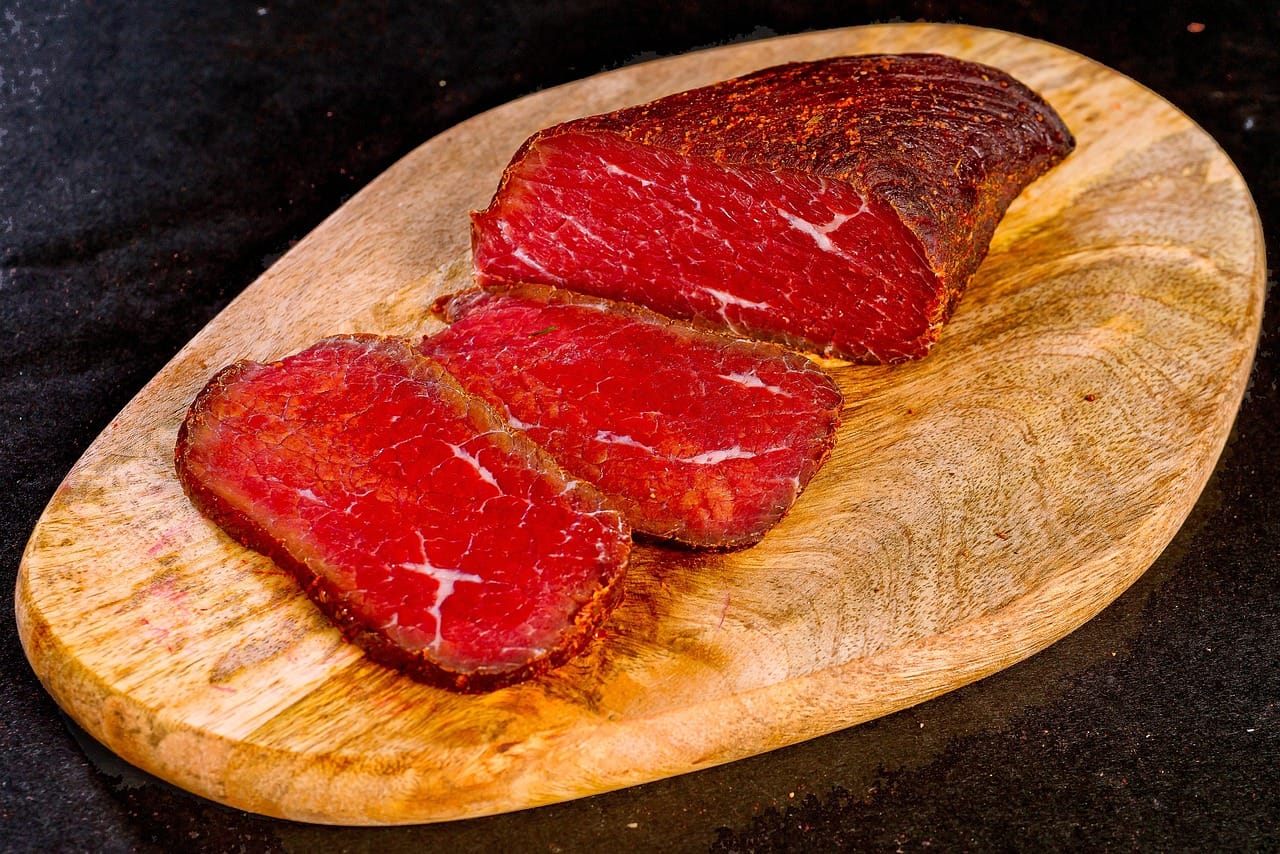
How to make venison pastrami is mostly a matter of patience. You cure a lean roast in a salt and curing-salt brine for one to two weeks, coat it in ground pepper and coriander, and smoke it. Montana Fish, Wildlife & Parks’ David Schmetterling sums it up: “Pastrami is just a corned roast (think corned beef) covered in coriander and pepper and then smoked” (Montana Outdoors). The recipes below finish at 150°F or 160°F. RAD’s house number for venison is 160°F.
Key Takeaways
- Use a lean hindquarter roast, such as a sirloin. Schmetterling says neck, shank and shoulder “don’t make good pastrami.”
- The brine needs pink curing salt (sodium nitrite), measured exactly.
- Brine times in these recipes run from at least five days (NWTF) to 15 days (Montana FWP).
- Dry the roast, coat it in coarse pepper and coriander, then smoke it low and slow.
- Cook to 160°F, RAD’s house temperature, and slice thin across the grain.
Pick the right cut
Beef pastrami comes from fatty cuts. Venison doesn’t have that fat, so Schmetterling says “use a lean cut such as a sirloin or other roast from the hindquarter.” He adds: “Venison neck meat, shanks, or shoulder roasts don’t make good pastrami.”
How to make venison pastrami, step by step
1. Make the brine. Schmetterling’s Montana Outdoors brine uses “1 gallon water,” a cup and a half of kosher salt, “1 c. sugar,” dark brown sugar, honey, pickling spice, garlic, and “8 t. Instacure #1 (aka, pink curing salt) or Prague powder #1.” He says to “Bring to a boil on the stovetop, stir, then remove from heat. Cool brine to room temperature. Refrigerate 1 hour to chill.”
Kenneth Baker’s recipe for the National Wild Turkey Federation (NWTF) uses “3 quarts water,” “1 cup coarse kosher salt” and a quarter cup of Tender Quick cure, with sugars, honey and spices (NWTF). That’s a different cure product than Instacure #1, so follow one recipe’s amounts all the way through. Don’t mix them.
Why cure at all? North Dakota State University Extension says “Sodium nitrite is very necessary to inhibit production and growth of the deadly toxin produced by the microorganism Clostridium botulinum” (NDSU Extension). Baker adds a warning: “Handle pink curing salt with care; it is toxic if ingested directly.” For cure math and labels, see nitrite cure levels for venison and pink curing salt versus table salt.
2. Cure the roast. “Submerge roast completely in brine. Place a dinner plate on the roast to keep it submerged,” Schmetterling writes. “After 15 days in the refrigerator, remove roast from brine, rinse in cold water, and pat dry.” At that point, he says, the roast is corned. Baker brines “for at least five days” and says to “Stir brine or flip roast once a day.”
3. Dry it. Schmetterling sets the roast “on a rack in the refrigerator for 2 days to dry and form a pellicle.” Baker rubs his roast and refrigerates it “at least overnight.”
4. Add the crust. Montana’s recipe uses “2 T. peppercorn, ground” and “2 T. coriander, ground.” Schmetterling says to “Grind the coriander and peppercorns and roll the roast in the mixture to completely cover.” Baker’s rub adds paprika, ground mustard and chopped bay leaves.
5. Smoke it. Schmetterling smokes “with a mixture of cherry and hickory for a total of 6 hours: Start at 180° F. for 2 hours, then 190° for 2 hours, and 200° until the internal temperature reaches 150°.” He keeps venison warm-smoked rather than cold-smoked. Beef pastrami is cold-smoked, he says, but that makes venison too smoky and drowns out the other flavors. Baker cooks at 300 degrees over a pan of reserved brine, with the roast tented in foil, “for 3 to 4 hours or until venison roast reaches 160 degrees internal temperature.”
6. Cool and slice. Baker says to “Let cool and thinly slice against the grain.”
What temperature should venison pastrami reach?
The two recipes split. Montana FWP’s finishes at 150°F. NWTF’s finishes at 160°F. RAD’s house temperature is 160°F, from Penn State Extension: “Cook venison, including jerky, to a minimum internal temperature of 160°F to reduce the risk of food-borne illness” (Penn State Extension). A lean roast can go from underdone to overdone fast, so trust your probe. See smoker probe calibration.
How long does venison pastrami keep?
Schmetterling: “Pastrami doesn’t freeze well, but it keeps in the refrigerator for a couple of weeks.” For storage after slicing, see refrigerated cured venison slice life.
How to eat it? Schmetterling’s pick is the Reuben, with “Swiss cheese, Russian dressing, and drained sauerkraut on dark rye bread.”
FAQ
What cut is best for venison pastrami? A lean hindquarter roast, such as a sirloin, per Montana FWP.
How long do you brine venison pastrami? At least five days in NWTF’s recipe and 15 days in Montana FWP’s. Follow the recipe whose cure you use.
Do you need curing salt for venison pastrami? Yes. Both recipes cure the meat, and NDSU says nitrite inhibits botulism toxin.
What temperature is venison pastrami done? RAD’s house number is 160°F. The recipes here finish at 150°F (Montana FWP) and 160°F (NWTF).
The other side of it
Some cooks say venison pastrami isn’t worth two weeks of fridge space when deli beef is right there, and that’s fair if your fridge is full. But it turns a tough-to-love hindquarter roast into sandwich meat, and most of the time is waiting, not work. The guy who pulls the roast from the brine on day three because he got hungry has made salty roast beef, not pastrami.
Keep reading
Latest deer news
Sources
- Tasting Montana: Venison Pastrami (Montana Outdoors), Montana Fish, Wildlife & Parks (David Schmetterling)
- Wild Game Pastrami, National Wild Turkey Federation (Kenneth C. Baker, Aug. 26, 2021)
- The Art and Practice of Sausage Making, North Dakota State University Extension
- Canning and Freezing Venison, Penn State Extension
Comments