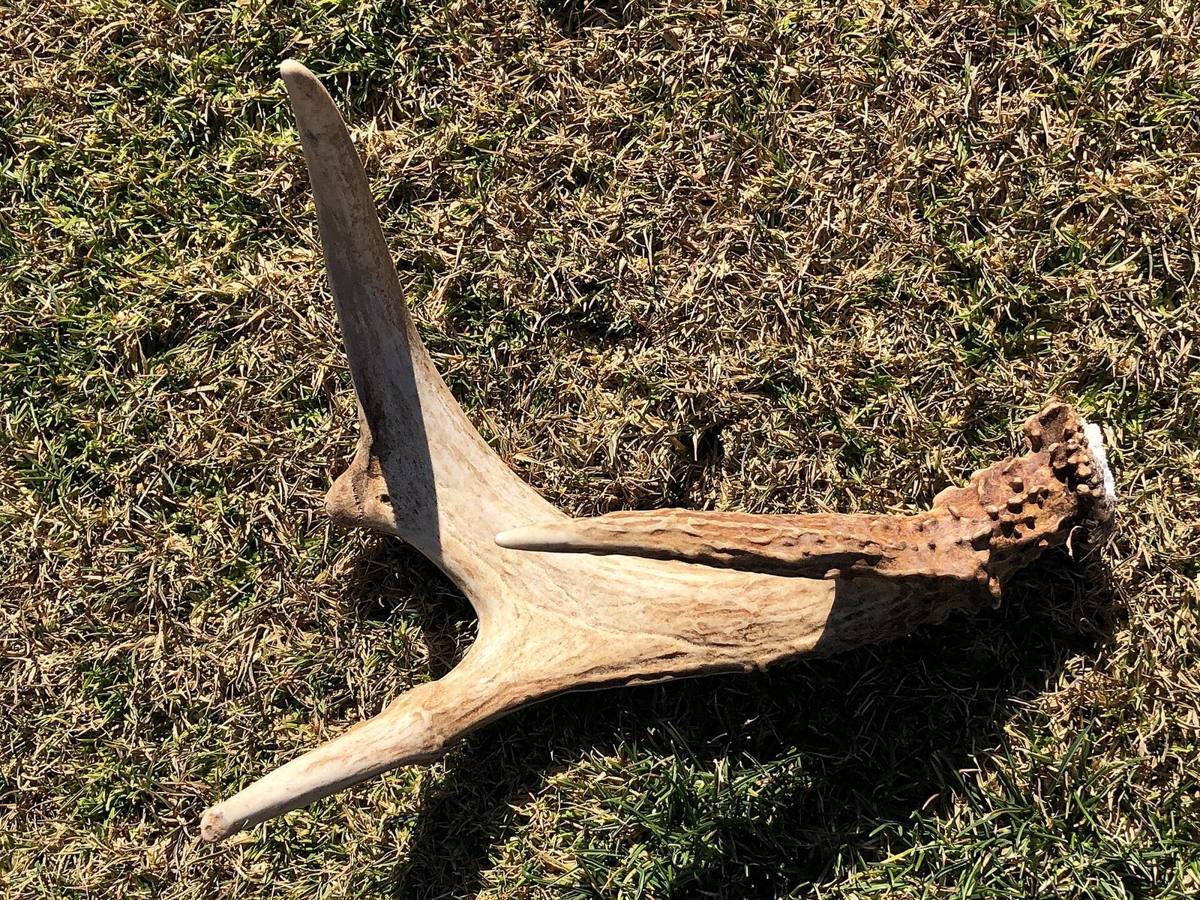
How to clean deer antlers comes down to one rule: clean gently and protect the color. Antler color is easy to lose and hard to get back. On a fresh rack, a small wire brush takes off dried blood. On a mount or a dusty shed, a damp cloth is usually enough. When you clean a skull for a European mount, wrap the antler bases and keep bleach and peroxide off them. Here’s how, from taxidermy and hunting sources.
Key Takeaways
- For dried blood on a fresh rack, Outdoor Life uses a small, fine wire brush.
- For dusty antlers, a damp cloth works. Skip oily cleaners on mounts.
- When simmering a skull, wrap the antler bases in plastic wrap or foil and tape them.
- Keep bleach and peroxide whiteners off antlers.
- Keep antlers out of direct sun, heat, smoke and high humidity.
Start with gloves on a fresh rack
If the antlers are still on a fresh skull, wear gloves. Penn State Extension advises hunters to “wear plastic, disposable gloves while handling animals” to reduce the risk of disease exposure (Penn State Extension). Clean the skull plate first. GOHUNT’s Brady Miller says to “Remove all the hide and carefully scrape away the remaining material from the skull plate with a thick-bladed knife,” then cover it with “Salt, Borax or Baking Soda” to dry it (GOHUNT).
How to clean deer antlers with dried blood
Blood dries into the grooves and around the burrs. In Outdoor Life’s antler-mounting guide, Brad Herndon uses wire brushes for the skull plate and says “The small, fine wire brush is also perfect for cleaning dried blood from the antlers” (Outdoor Life). Work lightly. The goal is to lift the blood, not scour the antler.
Cleaning dusty antlers and mounts
For antlers that are just dusty, whether on a plaque or a shed off the shelf, go easy. Writing for NRA Women, a taxidermy maintenance guide says “You can wipe antlers and horns down with a damp cloth.” The author adds that there are “cleaning and conditioning sprays available for antlers and hair/fur, but I prefer just using water for the most part,” and warns to “avoid oily cleaners that can damage or stain the hair” on a mount (NRA Women).
Protect antlers when you clean a skull
This is where most antlers lose their color. If you’re simmering a skull for a European mount, the antlers need protection.
MeatEater’s Brody Henderson says “If you’re boiling a skull that has antlers, wrap the first few inches up from the base of the antler in tinfoil or plastic wrap and tape it off. This will help prevent hot water from discoloring the antler.” He adds: “Try to keep the antlers out of the water as much as possible” (MeatEater).
A second MeatEater piece recommends a specific wrap: “The most common and effective method for wrapping antlers is electrical tape over cling wrap,” starting “just under the lip of the antler burr” (MeatEater). Outdoor Life gives the same advice: protect any part of the antler that might be submerged, because “This will preserve the antler’s color and natural look” (Outdoor Life). For the full process, see how to do a European mount.
Keep bleach and whiteners off antlers
Bleach is a common mistake. Outdoor Life’s Herndon is direct: “Don’t get bleach on the antlers.” MeatEater says “Do not add bleach!” to skull water at all, because “bleach will cause skulls to become brittle, crack and fall apart.”
Peroxide whiteners are the usual pick for whitening the skull, but they are no kinder to antlers. MeatEater notes that “Developer still whitens all surfaces indiscriminately,” so if you don’t want to restore color later, “be sure to keep horn sheaths off and antlers tightly wrapped throughout the whitening process.”
Keep clean antlers looking good
Where you hang antlers matters as much as how you clean them. The NRA Women guide says “Direct sunlight will fade and dry a mount over time” and that “Direct heat is terrible for a mount.” It recommends keeping humidity “below 60 percent,” because “Excessive humidity can lead to mold and mildew,” and notes that smoke “can cause yellowing of the mount over time.”
Dust occasionally. The same guide suggests “Once a month or once every four months is more like it!” for dusting, with a feather duster, compressed air or a soft vacuum attachment. For plaque mounts, see how to mount deer antlers.
FAQ
Can I use bleach to clean antlers? No. Outdoor Life says to keep bleach off antlers, and MeatEater says not to use bleach on skulls.
What’s the safest way to clean a mounted rack? A damp cloth, per the NRA Women guide.
How often should I dust a mounted rack? The NRA Women guide suggests once a month to once every four months, with a feather duster or compressed air.
Why did my antlers turn white? Hot water, bleach, peroxide whitener or sun can all strip color, according to the sources above.
The other side of it
Some hunters say a little sun bleaching on a shed is character, and that scrubbing and wrapping is fussing over bone. For a shed headed to the dog or the craft pile, they’re right. But on a buck you’ll look at for twenty years, color is most of the look, and it doesn’t come back on its own. The guy who dunks the whole rack in the bleach pot to save ten minutes of taping will spend a weekend shopping for wood stain.
Keep reading
Latest deer news
Sources
- Proper Field Dressing and Handling of Wild Game and Fish, Penn State Extension
- DIY Taxidermy: Classic antler plaque, GOHUNT
- How to Mount Your Own Deer Antlers (Brad Herndon), Outdoor Life
- Taxidermy Maintenance 101, NRA Women
- Ask MeatEater: How Do You Make a Skull Mount? (Brody Henderson), MeatEater
- 3 Common Mistakes Hunters Make with Euro Mounts, MeatEater (Wired to Hunt)
- Make Your Own Deer Skull Mount With DIY Taxidermy, Outdoor Life
Comments