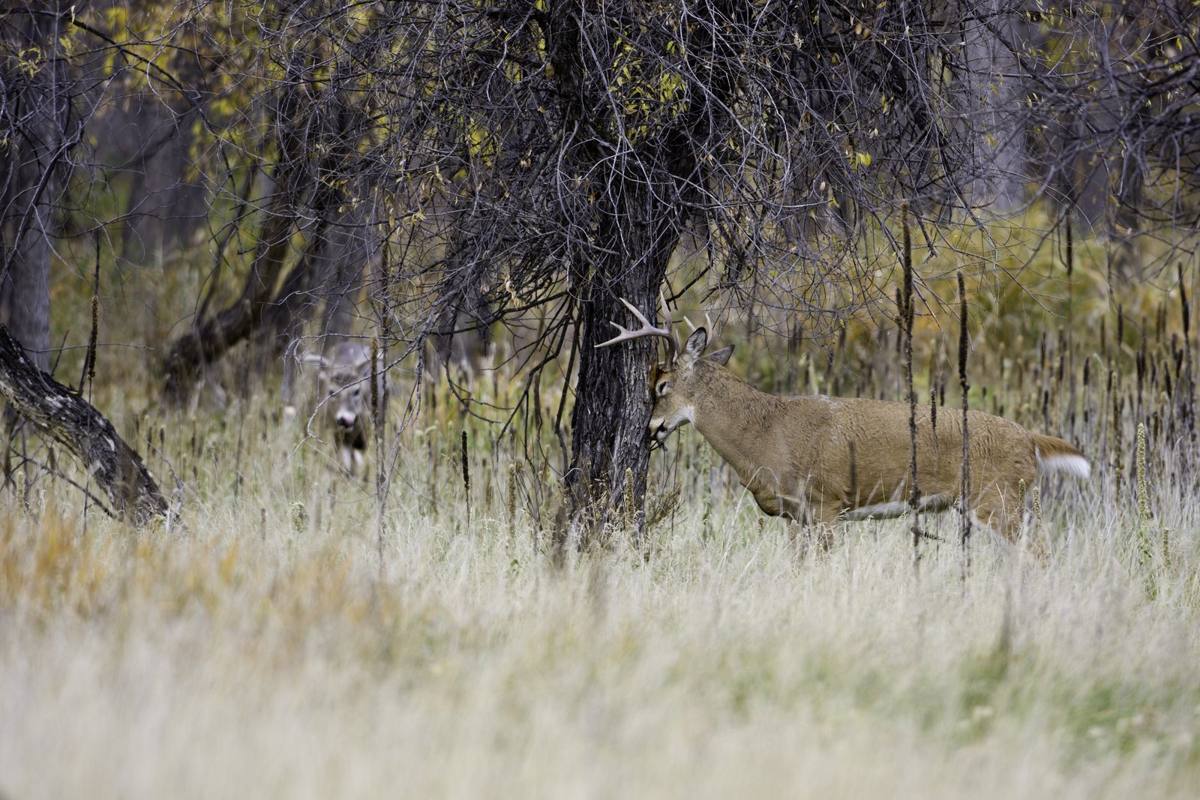
Arizona “rut dates” usually mean two different calendars: Rocky Mountain and desert mule deer breeding mainly in November-December, and Coues white-tailed deer breeding centered in January. Arizona Game and Fish hunter-education materials used statewide list mule deer breeding as November-December with young appearing June-August, and Coues breeding as January with young appearing around August (Arizona hunter-ed big game deer; AZGFD mule deer species). That split matters more than any viral “peak week” chart that pastes Midwestern whitetail timing onto an Arizona unit.
Key Takeaways
- Mule deer breeding is listed as November-December in AZ hunter-ed materials (Arizona hunter-ed).
- Coues white-tailed deer breeding is listed as January on the same materials (Arizona hunter-ed).
- Draw hunt dates are not the same thing as biological breeding dates - verify your unit and weapon season on AZGFD before you call a week the peak.
- Elevation and subspecies decide which calendar you are on; desert mule deer and Coues mountain range timing can differ from northern mule deer units.
- Road caution rises when bucks are moving hard during breeding windows.
Two species, two calendars
Arizona hosts mule deer statewide across desert shrub, grasslands, pinyon-juniper, pine, and mountain meadows from roughly 90 feet to 10,000 feet except the extreme southwest corner (AZGFD mule deer; Arizona hunter-ed). Coues whitetails concentrate in central and southeastern mountains roughly 4,000-10,000 feet in oak-grassland, chaparral, and pine (Arizona hunter-ed). If your hunt is Coues country, planning around a November mule deer chase week is the wrong biology. Adult mule deer bucks may exceed 200 pounds; Coues bucks rarely exceed 100 pounds - different animals with different calendars (Arizona hunter-ed).
What AZGFD materials actually say
The hunter-ed transcript sourced from AZGFD content is explicit: mule deer breeding period November-December; Coues breeding period January (Arizona hunter-ed). It does not publish a single statewide “peak day.” Local weather, herd condition, and elevation can shift observed chasing earlier or later inside those bands. Treat November-December as the mule deer planning window and January as the Coues planning window, then log what you see on your unit. AZGFD species pages describe mule deer as the most abundant big-game deer statewide and not limited to one terrain type (AZGFD mule deer).
Hunt dates versus breeding dates
Arizona deer hunting is permit-draw driven. A biological breeding window only helps if your tag and weapon season overlap it. Open the current AZGFD hunt guidelines for your unit before you book flights or burn vacation around a chart from another state. Early archery tags may sit before peak mule deer breeding; late rifle tags may sit after Coues breeding starts. Write your legal dates next to the biological band so you are not chasing a peak you are not allowed to hunt. Confirm harvest reporting, weapon restrictions, and unit boundaries on the same official packet.
Northern and desert mule deer nuance
Hunters often talk about earlier northern or Kaibab timing versus later southern desert mule deer timing inside the November-December band. That regional talk is useful scouting folklore only when it matches what you glass on the mountain - not when it replaces AZGFD season PDFs. Glass transition ranges, water, and browse edges where bucks actually travel during breeding rather than camping a pin that worked for a YouTube unit 200 miles away (AZGFD mule deer). Mule deer feed heavily at dawn and dusk on browse such as mountain mahogany, cliffrose, sagebrush, oak, and juniper; human activity can push feeding nocturnal (Arizona hunter-ed).
Coues planning notes
Coues bucks are small, home range is tight (hunter-ed lists roughly 4 square miles versus 30-50 for mule deer), and breeding is January-centered (Arizona hunter-ed). Expect different stand pressure and different weather than a November mule deer sit. Flagging white tails and a running gait help ID at distance versus mule deer stotting - useful when both species share a mountain. Coues prefer woodlands of chaparral, oak, and pine with clearings and more predictable summer precipitation (Arizona hunter-ed).
Field signs that mean breeding, not just feeding
Look for fresh scrapes, rubbed browse, chasing across openings, and bucks ignoring feeding groups they would not ignore in September. On Coues ground in January, expect similar intensity on a later clock. Photograph tracks and rubs with dates so next year’s plan is evidence-based. Do not invent a peak day from one afternoon of movement.
Road and camp ethics during breeding
Breeding bucks move more and pay less attention to roads. Drive slower at dawn and dusk through deer country during November-January windows. Do not approach rutting bucks for photos. Keep dogs leashed near camps when bucks are aggressive. Field dress and cool meat hard in desert midday heat even when mornings are cold. Predators listed for mule deer include mountain lion, coyote, and eagle - leave carcass waste handled legally and away from camp kitchens (Arizona hunter-ed).
How to build a personal timing log
For three seasons, write date, unit, temperature, wind, and whether you saw chasing, tending, scrapes, or only feeding. Compare that log to the hunter-ed breeding bands. After three years you will trust your notebook more than a national peak map. Keep the log with your license and hunt guidelines PDF. Note subspecies on every entry so Coues January data never contaminates a mule deer November plan.
Gear and access aligned to the window
November mule deer hunts often mean colder high-country nights and longer glassing sessions. January Coues hunts can mean ice on oak slopes and shorter days. Pack traction, optics that hold zero in cold, and a paper map. Water sources and browse edges matter more during breeding travel than random ridge camping. Confirm OHV and road closures on your unit before you build a glassing loop that depends on a locked gate.
Bottom line
Arizona rut planning is species-first: mule deer November-December, Coues January, per AZ hunter-ed materials drawn from AZGFD content (Arizona hunter-ed; AZGFD mule deer). Overlay your draw dates, then hunt the wind and access you can execute - not a Midwestern whitetail meme calendar.
The other side of it
The breeding bands here come from hunter-ed materials, which are built for teaching, not for telling you what’s happening in one canyon in one week. A hunter who has glassed the same Kaibab country for years would say his notes beat a two-month band every time, and he’d be partly right. The catch is that the draw picks your dates long before any notebook can help.
Keep reading
Latest deer news
Comments