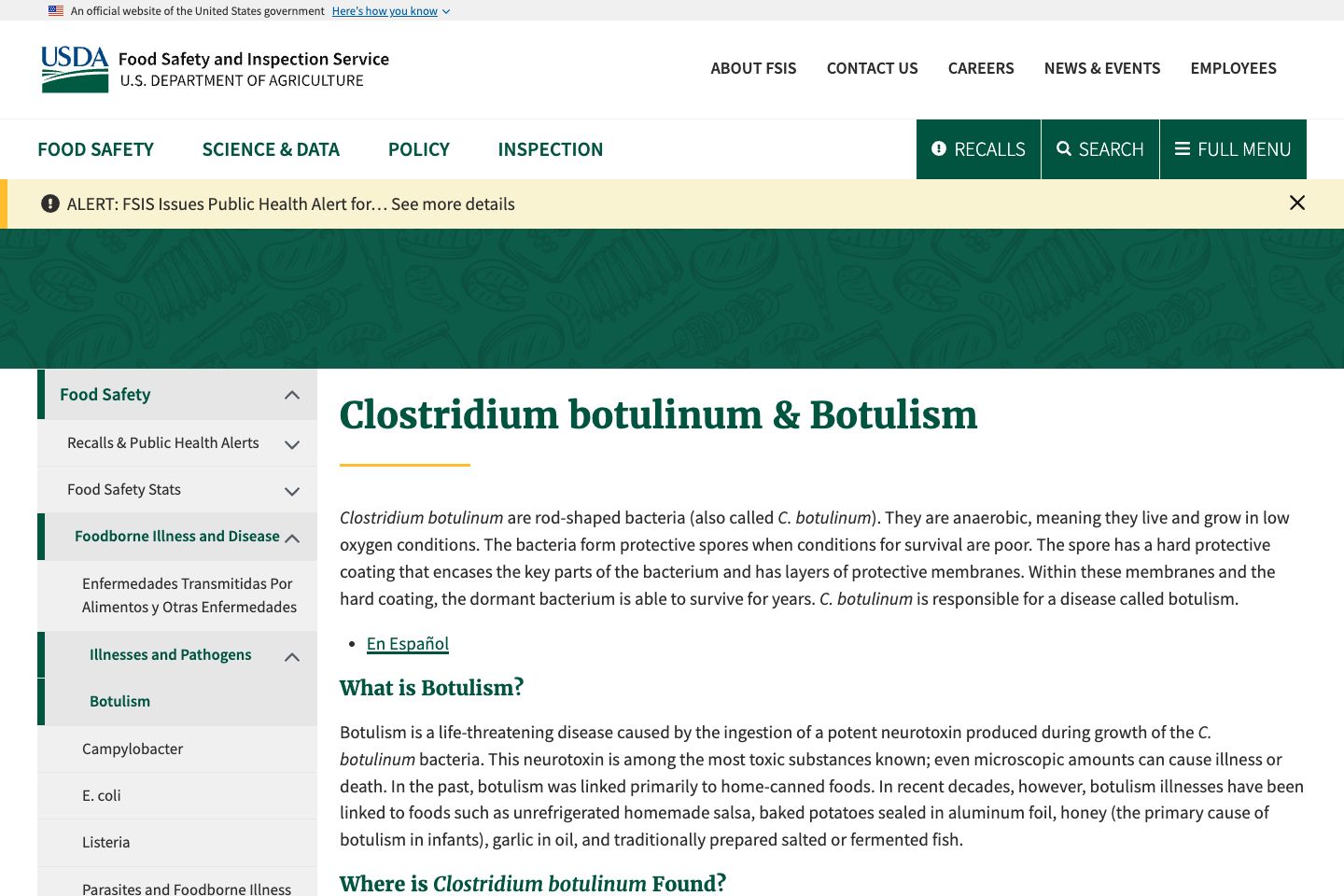
USDA FSIS describes Clostridium botulinum as anaerobic rod-shaped bacteria that form protective spores and produce a potent neurotoxin causing botulism (U.S. Department of Agriculture). The organism grows best under low-oxygen conditions; spores are common in soil and marine sediments; toxin types A, B, E, and F cause human illness (U.S. Department of Agriculture). FSIS states C. botulinum cannot grow below pH 4.6, so acidic foods can use water-bath canning, while higher-pH foods including meats must be pressure processed because only a pressure cooker reaches about 240-250°F, temperatures that can kill the spores (U.S. Department of Agriculture). Improperly home-canned low-acid food is called out as one of the most common causes of foodborne botulism: boiling may kill vegetative cells but not spores, and the sealed low-oxygen jar stored at room temperature lets spores germinate and make toxin (U.S. Department of Agriculture). The toxin is heat-sensitive; FSIS says boiling the food 10 minutes before serving (longer at altitude) can destroy toxin already formed (U.S. Department of Agriculture). Nitrites in cured meat and poultry products are authorized to inhibit C. botulinum spore growth, with USDA authorization dating to 1925 (U.S. Department of Agriculture). Vacuum bags and foil wraps create low-oxygen niches; that is useful for freezer quality when meat stays frozen or refrigerated, but it is exactly the environment FSIS warns about when low-acid meat is left warm and sealed (U.S. Department of Agriculture). Penn State Extension separately tells hunters that meat must be canned in a pressure canner and that dial gauges should be checked yearly (Penn State Extension).
Key Takeaways
- C. botulinum is anaerobic; spores survive years; toxin is extreme (U.S. Department of Agriculture).
- Meats are low-acid: pressure-can only; water bath is not enough (U.S. Department of Agriculture; Penn State Extension).
- Pressure cooker target cited by FSIS: about 240-250°F to kill spores (U.S. Department of Agriculture).
- Never taste food from swollen, leaking, or spurting containers (U.S. Department of Agriculture).
- Boil home-canned low-acid foods 10 minutes before serving (+1 min per 1,000 ft) (U.S. Department of Agriculture).
- Nitrites help inhibit spore growth in cured products (U.S. Department of Agriculture).
Anaerobic packaging that stays safe
Frozen or continuously refrigerated vacuum packs keep quality without giving spores a warm growth window; the failure mode FSIS describes is room-temperature storage of sealed low-acid meat after inadequate processing (U.S. Department of Agriculture). Refrigerate leftovers within 2 hours (1 hour if air is above 90°F) (U.S. Department of Agriculture). Symptoms of botulism usually appear within 12 to 36 hours but documented cases range from 4 hours to 8 days, and earlier onset means more serious disease (U.S. Department of Agriculture).
Home canning venison
Follow pressure-canning processes for meat; discard swollen or gassy jars; double-bag spoiled cans into outdoor trash away from people and pets (U.S. Department of Agriculture). Use National Center for Home Food Preservation guidelines FSIS points to at nchfp.uga.edu (U.S. Department of Agriculture; National Center for Home Food Preservation). PSU’s yearly dial-gauge check keeps home pressure canners honest (Penn State Extension).
Garlic-in-oil and foil-wrapped lessons for camp cooks
FSIS lists garlic in oil and baked potatoes sealed in foil among modern botulism vehicles; camp cooks making oil-packed venison snacks or foil-wrapped holds should refrigerate and avoid room-temp anaerobic storage (U.S. Department of Agriculture). Honey is called out for infant botulism risk and is irrelevant to adult jerky but reminds cooks that spores are widespread (U.S. Department of Agriculture).
Cure chemistry as a control
When you make cured sausage, nitrite use is the FSIS-recognized control that slows C. botulinum spore growth in those products; untested “nitrite-free” room-temp dried meats do not inherit that control (U.S. Department of Agriculture).
Bottom line
Treat sealed warm venison as a botulism risk: pressure-can low-acid meat, keep vacuum packs cold or frozen, never taste swollen jars, and use nitrite-cured processes only with tested recipes (U.S. Department of Agriculture; Penn State Extension).
The other side of it
For the hunter who vacuum-seals and freezes, this risk is narrower than the headline suggests. The failure mode FSIS describes is inadequate processing followed by room-temperature storage, which mostly means home canning, not a cold chest freezer. A frozen pack is not a jar on a shelf. The camp cook who water-baths his venison because the pressure canner scares him has the risk exactly backward.
Keep reading
Latest deer news
Comments