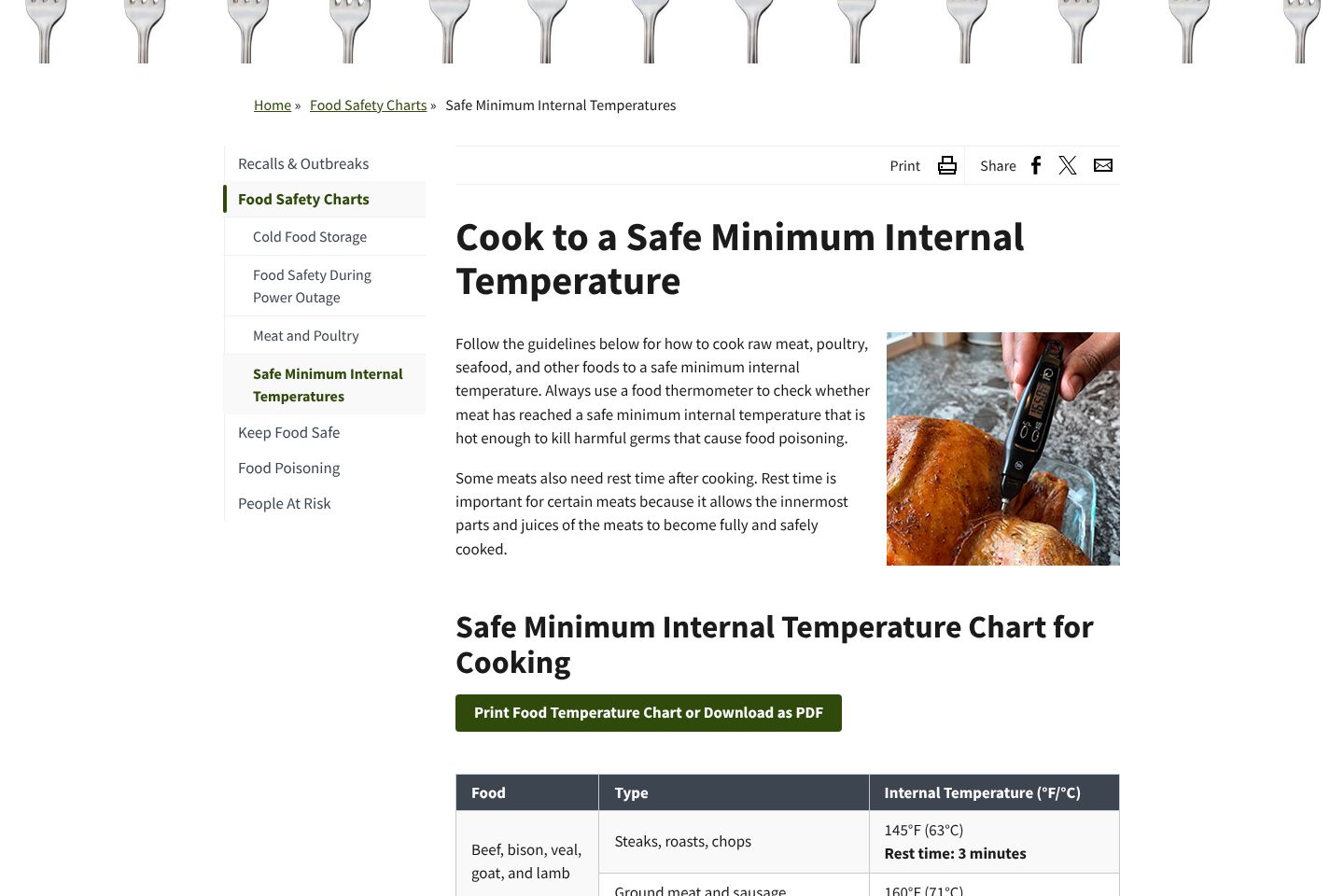
Smoke wood species change surface color and flavor on deer sausage, but NDSU’s safety spine is still staged smokehouse heat and verified internal temperature (NDSU Extension FN176). Hickory, apple, cherry, or oak can brown casings differently while the core lags - only the thermometer decides when summer sausage hits 155 deg F in the FN176 example (NDSU Extension FN176). FoodSafety.gov’s 160 deg F venison line remains the chart for products judged as venison (FoodSafety.gov).
Key Takeaways
- Wood equals flavor/color; probe equals safety (NDSU Extension FN176)
- Example finish 155F (NDSU Extension FN176)
- Staged 140/160/170 smokehouse (NDSU Extension FN176)
- Calibrate probes (NDSU Extension FN176)
- Venison 160F when applicable (FoodSafety.gov)
- Sanitize racks (FSIS Food Safety Basics)
Color lies
Dark mahogany smoke color can appear before the center is done (NDSU Extension FN176).
Bitter creosote
Smoldering dirty smoke hurts flavor without helping lethality (NDSU Extension FN176).
Thin sticks
Even with mild woods, still verify core temperature by diameter (NDSU Extension FN176).
After cook
Cold-shock per product instructions (NDSU Extension FN176).
Raw drip
Wood chips do not sanitize raw-contaminated racks (FSIS Food Safety Basics).
Cure still required
Follow recipe cure amounts regardless of wood (NDSU Extension FN176).
Instrument checks
Before running Smoke Wood Species Effects on Venison Surface Color, verify every thermometer for this topic against an ice-water bath near 32 deg F and, at known elevation, a boiling-water check. Write the offset on the probe cable. The batch fails when the smokehouse display, the handheld stem, and the drawer dial disagree and nobody records which reading closed the batch. Replace tools that drift more than a few degrees between checks rather than building a folklore offset chart.
Cold-chain notes
Keep raw deer for Smoke Wood Species Effects on Venison Surface Color at 40 deg F or below from the camp cooler through grinding and stuffing. Move cooked product through the danger zone within two hours, or within one hour if the air is above 90 deg F. Venison is not exempt from FSIS clocks because the meat is cured, smoked, or foil-wrapped. Shallow pans chill faster than deep stockpots of leftovers.
Bottom line
Choose smoke woods for deer surface color and taste, but end the cycle on NDSU’s thermometer targets (NDSU Extension FN176).
The other side of it
For a piece named after wood species, it says almost nothing about which wood does what to the color, so the reader who came for that answer leaves with a thermometer lecture. It also puts a 155 degree sausage example next to a 160 degree venison line without settling which one your batch answers to. Somebody at camp will still pull his sticks because they look like a saddle and call that a probe reading.
Keep reading
Latest deer news
Comments