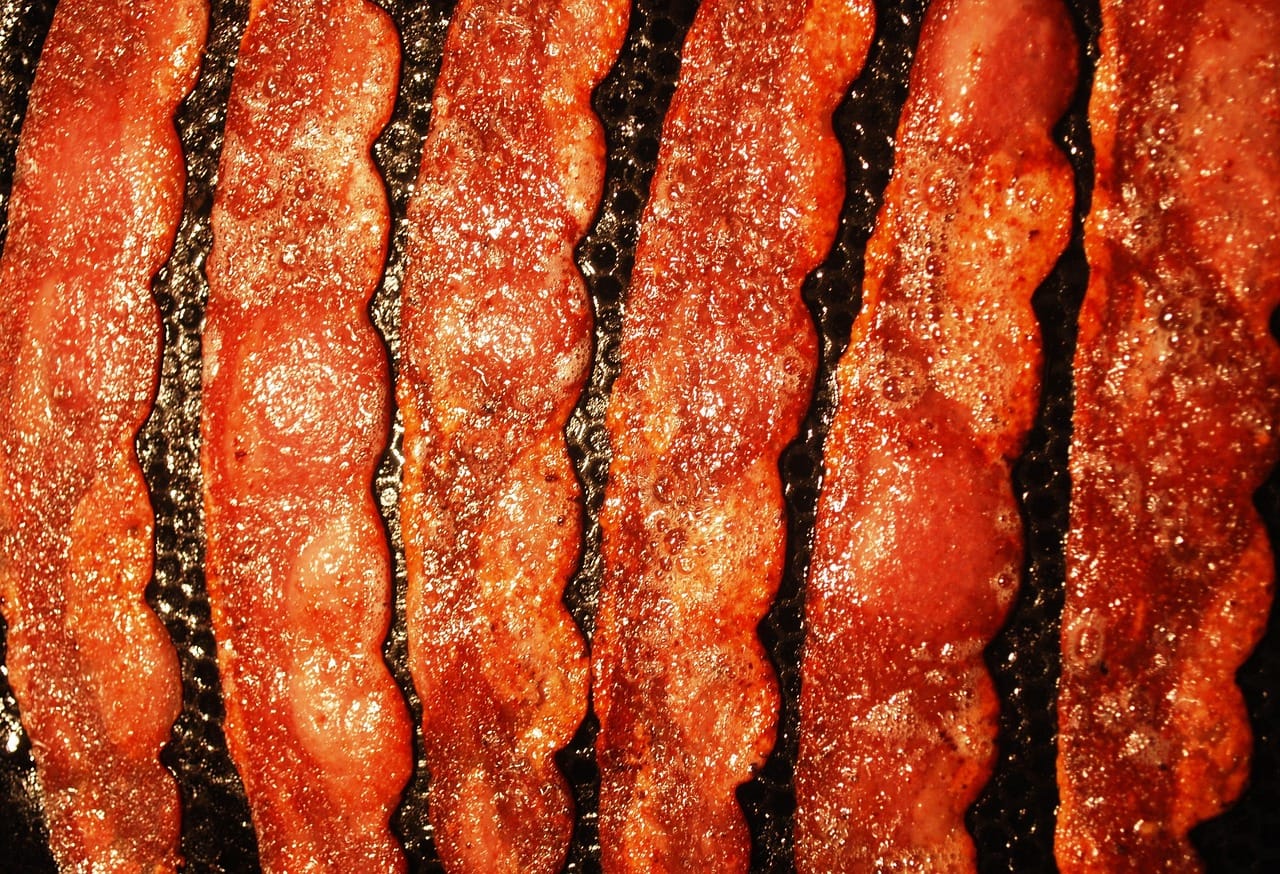
How to make venison bacon, in one line: grind venison with an equal weight of fatty pork, mix in salt, Prague Powder #1 and a binder, press it into a slab, cure it overnight in the fridge, then smoke it to an internal 160°F. That’s the formed-slab method in a published American Hunter recipe (American Hunter), and 160°F is the same finish temperature Oregon State Extension uses for home-cured bacon (OSU Extension).
Key Takeaways
- A deer has no pork belly to cure, so most venison bacon is a formed slab: ground venison plus ground pork, cured and smoked.
- The cure matters more than the spice. Use Prague Powder #1 (Curing Salt #1), which OSU Extension says is “6.25% sodium nitrite and 93.75% salt,” and measure it.
- Cook it to 160°F internal. Then chill it, slice it and use it within seven days or freeze it.
- Frozen home-cured bacon is best within four months, per OSU Extension.
Why can’t you make venison bacon like pork bacon?
A whitetail doesn’t carry a fat belly like a hog. So venison bacon borrows the fat. The American Hunter recipe puts it plainly: “Venison is lean, and the fat and moisture from ground pork are essential to help with flavor but, more importantly with consistency.” It calls for pork butt or front shoulder at “60/40” meat to fat (American Hunter). For more on picking the fat, see our guide to ground venison fat from beef versus pork.
How to make venison bacon, step by step
Here’s the formed-slab method from American Hunter’s recipe, for a 5-pound batch (American Hunter).
| Ingredient | Amount |
|---|---|
| Ground venison | 2½ pounds |
| Ground pork | 2½ pounds |
| Curing salt (Prague Powder #1) | 1 teaspoon |
| Salt | 2 tablespoons |
| Non-fat powdered milk | 1 cup |
| Brown sugar | ⅓ cup |
| Onion powder, garlic powder, smoked paprika, dried mustard, black pepper | 2 teaspoons each |
| Ice water | 1 cup |
1. Mix the cure into the meat
Combine the salts, milk powder, cure and spices with the water, then pour it over the ground venison and pork and mix it thoroughly by hand or with a mixer. The milk powder is a binder. The recipe says it holds “the meat firmly together” and helps “reduce the shrinkage of the bacon slab when cooking.”
2. Press and cure overnight
Line two 9 x 13 pans with plastic wrap or foil, split the meat between them and press each half “so it is 2 inches thick.” Cover it and refrigerate overnight “to allow the meat to cure and the mixture to bind.”
3. Smoke it slow and step it up
Turn the slabs onto a wire rack and warm the smoker to 130°F. Then: “Every hour, increase the smoker’s temperature by 20 degrees. The bacon is done when it reaches an internal temperature of 160°F.”
4. Cool, slice, store
Let the slab cool completely before slicing. The recipe says the result “should be sliced thin and still hold together,” and that it is fully cooked and can be eaten as is or fried like side bacon.
If you have a processor grind your deer, the same recipe notes you can have “five-pound chubs of burger made with the pork ground right into it.” That saves a step.
How much cure do you use for venison bacon?
Measure it, every time. American Hunter’s rule is “use one teaspoon of cure for every five pounds of meat,” and “More or less is not best” (American Hunter). OSU Extension’s tested pork belly cure uses the same 1 teaspoon of Curing Salt #1 per 5 pounds (OSU Extension).
Use the right cure. OSU says Prague Powder #1 “is recommended for curing bacon at home.” Prague Powder #2 contains sodium nitrate, is meant for products “that will not be cooked before eating,” and is “not recommended for curing bacon” because it is likely to produce more nitrosamines when cooked hot (OSU Extension). Pink curing salt isn’t Himalayan pink salt either. OSU says those “are not the same.” Our guide to pink curing salt and table salt mix-ups covers storage.
Why bother? OSU says nitrite curing salts “are an effective inhibitor of Clostridium botulinum growth and toxin production.” North Dakota State University’s sausage guide calls sodium nitrite “very necessary to inhibit production and growth of the deadly toxin” (NDSU Extension). A slab that sits for hours in a 130°F smoker is the kind of product the cure is there for.
What temperature is venison bacon done?
160°F internal. That’s where the American Hunter recipe finishes, it’s OSU’s target for home-cured bacon, and Penn State Extension says to cook “ground meat to 160°F (71°C)” for game (Penn State Extension). Since formed venison bacon is ground meat, 160°F is the number. Use a probe thermometer in the thickest part of the slab.
NDSU adds a venison-specific reason to be careful: venison “can be heavily contaminated with fecal bacteria depending on the skill of the hunter in dressing the animal and location of the wound” (NDSU Extension). Grinding spreads whatever was on the surface through the batch, which we explain in why grinding spreads surface bacteria in venison.
Can you make venison bacon from a whole roast?
People do, by curing and smoking a whole venison cut. We didn’t find a tested extension recipe for whole-muscle venison bacon, so we’re not giving times or cure strengths for it. OSU’s tested recipes are written for pork belly, with five to seven days of curing in the refrigerator (OSU Extension). If you adapt anything, keep OSU’s basics: cure at 40°F, the right amount of Prague Powder #1, cook to 160°F.
How long does homemade venison bacon keep?
OSU Extension’s rules for home-cured bacon: after cooking, cool it an hour, wrap it and chill it overnight, then “Slice to desired thickness and refrigerate for up to seven days or freeze.” It recommends vacuum sealing and says “If frozen, use within four months for best quality” (OSU Extension).
When you cook it, go easy on the char. OSU says “burned bacon contains measurable levels of nitrosamines” and that microwaved bacon “develops fewer nitrosamines than fried bacon.”
The other side of it
Purists will say a ground-and-pressed slab is closer to breakfast sausage than bacon. The pork also makes up half the batch, so this isn’t the lean meat you shot. Still, the guy who skips the cure because he “never got sick yet” is running a botulism experiment on his own family.
Keep reading
Latest deer news
Sources
- Recipe: Formed Venison Bacon | American Hunter, American Hunter (NRA)
- Making cured bacon at home (PNW 784) | OSU Extension Service, Oregon State University Extension Service
- The Art and Practice of Sausage Making | NDSU Extension, North Dakota State University Extension
- Proper Care and Handling of Venison from Field to Table, Penn State Extension
Comments