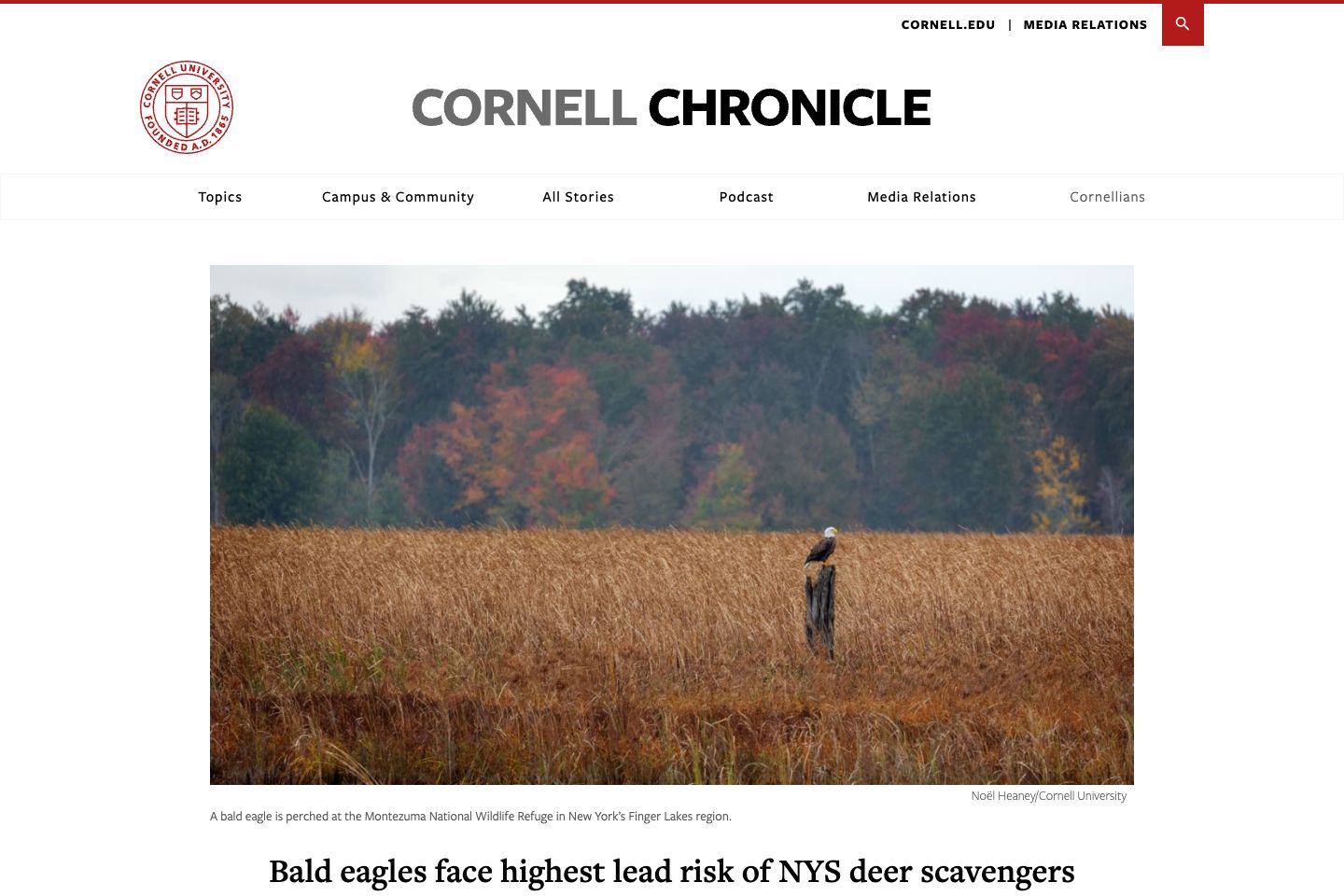
Gut piles feed eagles, ravens, coyotes, and bears - and they can also feed lead fragments into scavenger bloodstreams when hunters use lead bullets. Cornell wildlife health reporting shows bald eagles face high lead risk among New York deer scavengers, and broader eagle lead-poisoning coverage underscores the ammunition pathway (Cornell Chronicle eagles lead risk; Cornell What You Leave Behind). Colorado Parks and Wildlife game-handling pages and other agencies emphasize clean field care and lawful carcass disposal (CPW handling game meat). Conservation officers remind hunters that dumping deer remains illegally on public land or ditches can be a citation, not just bad manners (Duluth News Tribune officer Q&A disposal). Ethics here means scavenger ecology plus rules plus ammunition choice.
Key Takeaways
- Gut piles are important scavenger food and a lead-exposure pathway when lead ammo is used (Cornell Chronicle eagles lead; Cornell What You Leave Behind).
- Prefer copper or other non-lead bullets when you can, especially where eagles concentrate.
- Follow state rules on leaving, burying, or packing out remains - illegal dumping is enforced (Duluth News Tribune officer Q&A).
- Keep piles away from parking lots, trails, and water.
- Glass carefully before returning to a pile - eagles and other hunters may be there.
Scavenger food webs
A fresh pile can draw eagles within hours. That is healthy ecology when lead-free. It becomes a conservation problem when fragments pepper the paunch and lungs left behind (Cornell What You Leave Behind; Cornell Chronicle eagles lead).
Lead reduction
Copper bullets reduce fragment showers. If you still shoot lead, consider packing out wound-channel trim and minimizing left lung tissue heavily seeded with fragments. Perfect solutions vary by state guidance; directionally, less lead in piles helps eagles.
Legal disposal
Some states ban depositing carcasses on public land or road rights-of-way. Officer Q&As in Minnesota media illustrate tickets for lazy dumps (Duluth News Tribune officer Q&A). Read your digest. Private land piles still deserve setbacks from neighbors’ wells and picnic spots.
Public land etiquette
Do not field-dress in the parking lot. Drag far enough that next week’s hikers are not walking through gut slime. Avoid gutting on salmon or trout stream banks. Pack gloves and bags out.
Safety revisits
Returning at dark for a flashlight photo of eagles on your pile is how people create wildlife conflicts and safety issues. Observe from distance. Never haze eagles with shots.
Club standards
Require copper for club hunts near known eagle wintering areas. Map preferred gutting zones on private leases. Share agency disease and lead pages at annual meetings (CPW handling game meat; Cornell What You Leave Behind).
Bottom line
Gut piles belong in the scavenger economy under legal placement and preferably without lead fragments - treat disposal as ethics plus ecology, not an afterthought (Cornell Chronicle eagles lead; Cornell What You Leave Behind; Duluth News Tribune officer Q&A).
Practical drill 1 on gut pile ethics
Take one afternoon and apply a single sourced idea from Cornell Chronicle eagles without adding three new gadgets. Write what you saw, what the wind did, and whether you would repeat the sit. Cross-check disagreements with Cornell leave behind. Habit beats gear piles.
Teaching point 1 for gut pile ethics
Explain the mechanism out loud to a new hunter in under two minutes using only claims you can source. If you start inventing, stop and reopen Cornell Chronicle eagles. Accuracy is part of hunt culture, not optional nerd flavor.
Closing note
Document one observation this week that either confirms or challenges the sourced claims above, including date, wind, and location type, then store that note with the regulation or research link you used so the next argument stays grounded.
Related: Incidental take of protected species and Cornell What You Leave Behind.
The other side of it
The lead argument rests on New York eagle work, and the article admits the right fix varies by state and only points in a direction. A hunter on ground where eagles don’t concentrate can fairly ask why a club should mandate copper off one state’s scavenger data, and a pile left where the deer fell, where that’s legal, is about as natural as disposal gets. Still, the guy who dumps his carcass in the road ditch has never lost a minute of sleep over eagles.
Keep reading
Latest deer news
Sources
- Bald eagles face highest lead risk of NYS deer scavengers | Cornell Chronicle
- What You Leave Behind - Lead Ammo Risk to Wildlife Species
- Handling and Eating Game Meat | Colorado Parks and Wildlife
- Ask a conservation officer: Deer disposal is illegal on public land - Duluth News Tribune | News, weather, and sports from Duluth, Minnesota
Comments