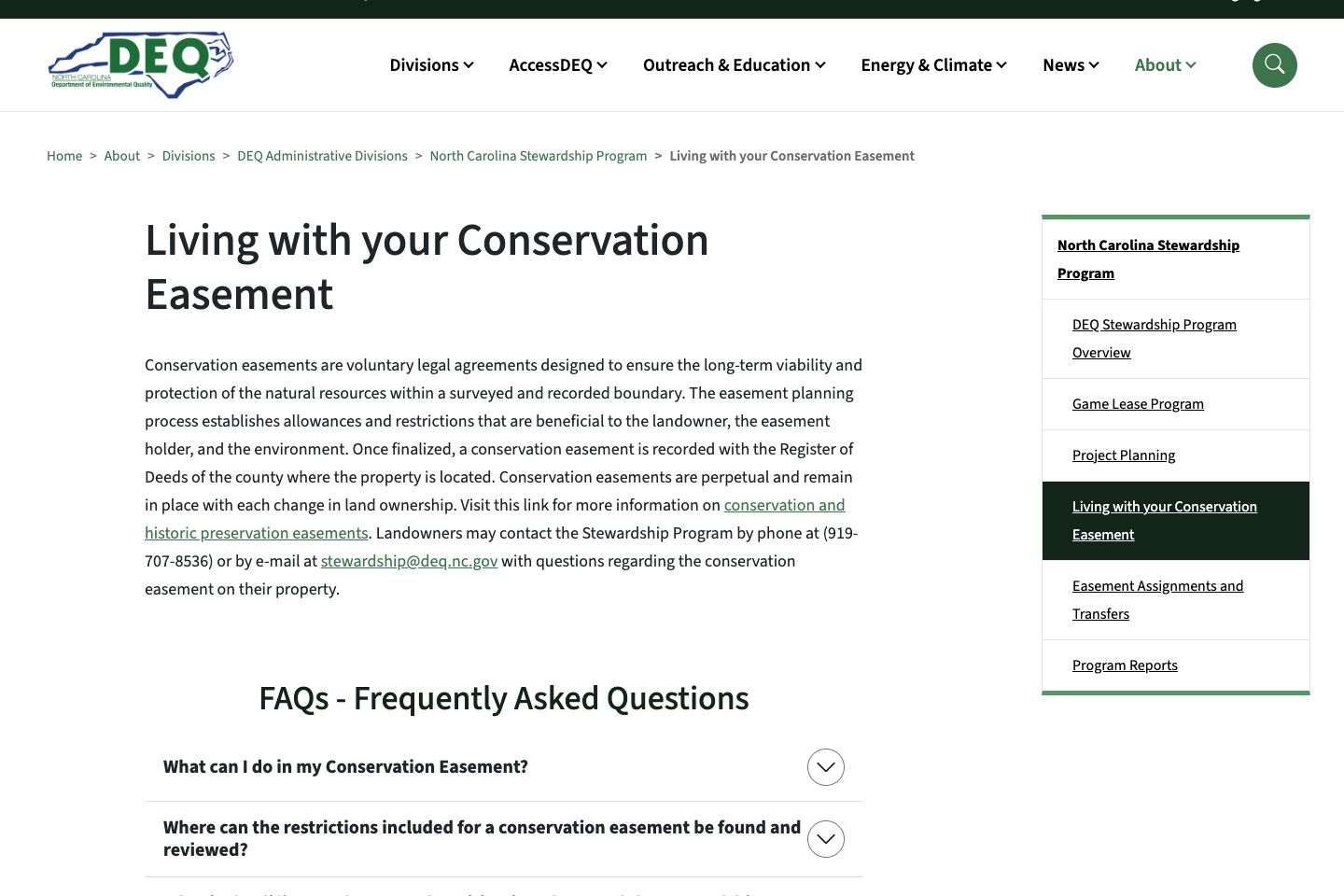
You can hunt deer on conservation easement land only when the deed or the landowner allows it, because a conservation easement is not a public hunting easement unless the deed says so. North Carolina stewardship guidance says landowners keep many use rights while the easement restricts development and other listed activities, and public access is not automatic (NC DEQ living with your easement). Some Montana Fish, Wildlife and Parks easement deeds do require public hunting access, but only when that was the bargained deal (MT FWP Sweathouse Creek CE deed draft; MT FWP Stafford Ferry CE deed).
Key Takeaways
- Read the recorded deed. Some easements reserve private hunting, and some require public hunting access (NC DEQ living with your easement; MT FWP Stafford Ferry CE deed).
- A green conservation layer on a county map or phone app is not permission to hunt.
- Landowners who want to keep hunting and guest hunting should reserve those rights expressly when drafting (App State easement terms example).
- Public-access easements can set hunter caps, parking rules and safety zones, and hunters have to follow them (MT FWP Sweathouse Creek CE deed draft).
Does a conservation easement mean anyone can hunt?
No. In many southeastern farmland and stewardship easements, the land stays private. NC DEQ’s stewardship guidance is about living with restrictions while remaining the landowner, not opening a WMA (NC DEQ living with your easement). North Carolina’s farmland preservation materials likewise focus on keeping land in agriculture and open space under the deed terms (NC ADFP landowners). Hunters still need landowner permission or a lease that fits the deed.
Maps feed the myth. County GIS layers labeled conservation or open space mix fee-title public land, private easements and preferential tax programs. A green polygon is a research lead, not permission. Hunters who treat every one as walk-in land get trespass tickets.
Do conservation easements ban hunting?
Not as a rule. Deeds often reserve recreational uses, hunting included, for the grantor and invitees. Sample reserved-rights language in academic farmland easement teaching materials includes lawful hunting and permitting others to hunt, subject to law (App State easement terms example).
Silence in a deed is the danger. Landowners who skip reserved hunting language can lose flexibility they meant to keep.
When does an easement require public hunting access?
When the deed says so. Some Montana FWP conservation easements expressly require the landowner to allow public hunting, sometimes with minimum hunter opportunity numbers and rules against discriminatory access (MT FWP Sweathouse Creek CE deed draft; MT FWP Stafford Ferry CE deed). Those deeds are bargains. The Stafford Ferry deed, for one, grants the easement “in consideration of the sums paid by the Department” (MT FWP Stafford Ferry CE deed). Copying Montana assumptions onto a private North Carolina farm easement is how rumors start.
Even then, the landowner may still post safety zones, require sign-in or limit parking. Those operational rules usually sit inside the deed or an attached management plan (MT FWP Sweathouse Creek CE deed draft). Follow them.
How do you confirm you’re allowed to hunt eased land?
Ask for the easement summary or the recorded book and page. Confirm whether you’re a guest of the landowner, a lessee, or a member of the public under a public-access clause. Park only where the deed or the landowner’s map allows, and respect closed safety zones around homes and livestock even when hunting is allowed elsewhere on the tract.
Before opening morning, write down who owns the land, who holds the easement and the exact sentence that allows your hunt. If you can’t point to a sentence, you’re guessing (NC DEQ living with your easement; MT FWP Stafford Ferry CE deed).
Can you lease, plant food plots or build stands on eased land?
Only within the easement’s limits. A deer lease that authorizes permanent stands, food plots or ATV trails can violate easement limits on structures, agriculture or motorized use, so align the lease with the easement before opening day. The National Agricultural Law Center’s lease guidance stresses clear written terms, and an easement-compliance sentence belongs in any lease on eased land (National Ag Law Center hunting lease factsheet). When the documents conflict, get a lawyer.
Some easements allow wildlife habitat improvement, and others limit grading, non-native plantings or chemical use. Get written confirmation before disking a plot. On an NRCS wetland reserve easement, for example, federal rules give the United States “the right to authorize compatible uses of the easement area” (7 CFR 1468.37).
Easement holders check on the land. In North Carolina’s stewardship program, the holder “conducts routine inspections of the conservation easement boundary and interior” (NC DEQ living with your easement). A dispute with a holder over an unauthorized blind gets harder if you also hosted unpaid public hunters contrary to a private-only deed. Keep communications professional and document permissions. Private-only easements should still carry liability insurance and written guest lists if hunting continues.
What should landowners put in a new easement about hunting?
Their hunting goals, at the first drafting meeting: family only, lease income, youth hunts or public access. Don’t assume you can add public hunting later without amending the deed, and amendments are hard.
Related: Deer lease contracts and NC DEQ living with your easement.
The other side of it
Asking a guest hunter to pull the recorded deed and find the book and page is a tall order, and in practice most folks run on the landowner’s written permission and trust him to know his own easement. This page also builds its picture from North Carolina and Montana paperwork, which is a narrow window on a lot of deeds. Fair on both counts. But the guy who reads every green polygon on his phone app as an invitation is why landowners quit answering the phone.
Keep reading
Latest deer news
Sources
- Living with your Conservation Easement | NC DEQ
- ADFP - Information for Landowners | NC Agriculture
- MT FWP Sweathouse Creek CE deed draft (fwp.mt.gov)
- MT FWP Stafford Ferry CE deed (fwp.mt.gov)
- App State easement terms example (bvfarm.appstate.edu)
- Hunting Leases
- 7 CFR 1468.37, Easement and 30-year contract participation requirements (Cornell LII)
Comments