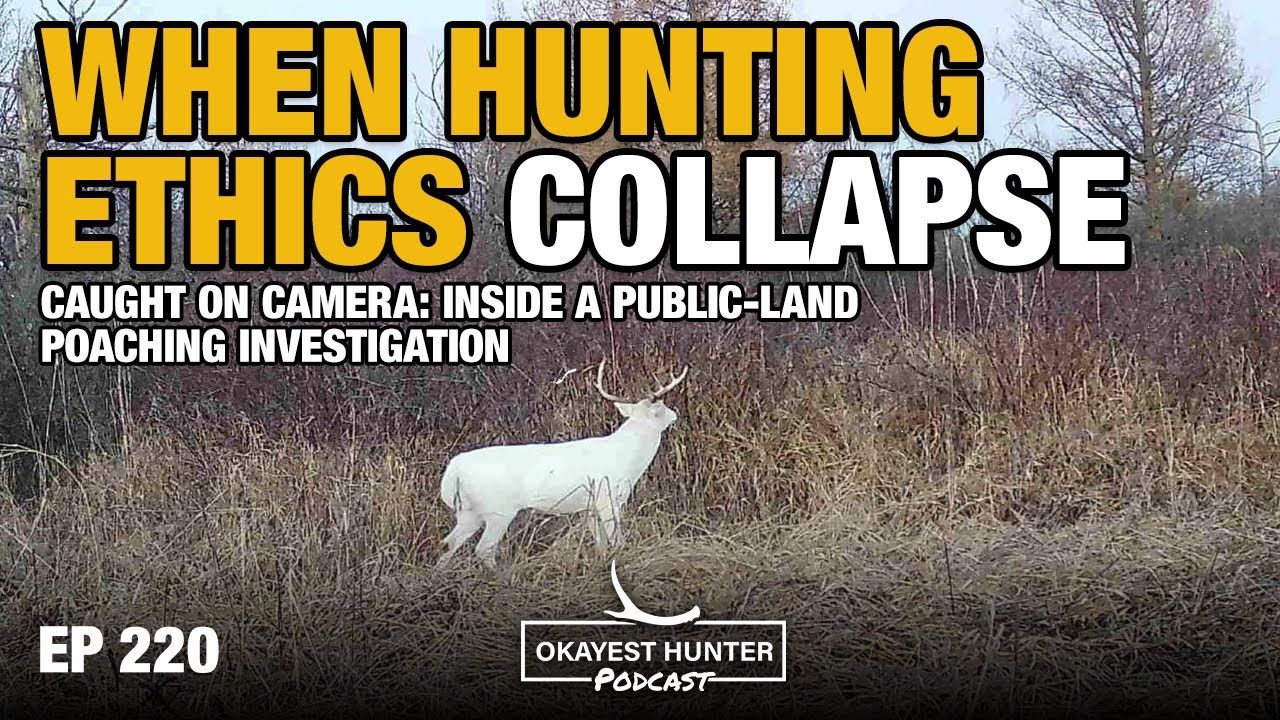
Okayest Hunter’s “Caught on Camera: Inside a Public-Land Poaching Investigation” sits in the trail-cam/game-warden true-crime lane popular with deer hunters. Without a transcript reconstruction, the durable public lesson is how modern poaching cases are built: cameras, vehicle descriptions, tip lines, carcass evidence, and digital breadcrumbs - and how lawful hunters should help without playing cosplay detective.
Key Takeaways
- Public-land poaching steals from everyone who shares the unit; report tips with times, plates, and locations.
- Trail cameras and cell data increasingly appear in wildlife cases - assume illegal behavior can be reconstructed.
- Do not confront armed suspects; call wardens.
- Lawful hunters should keep their own camera use legal (stand rules, private-land consent).
- Creator docu-stories are entry points; agency press releases are the record.
Why public-land poaching stings
A poached mature buck on a walk-in area is a theft from the commons. Okayest Hunter’s audience of everyday hunters feels that theft personally - hence episode demand.
How investigations often start
A tip about night shots, a carcass without a tag, a camera thief, or a truck on a closed road. Wardens correlate time stamps across cameras and toll onX-style tracks when legally obtained. Your detailed tip matters more than your theory.
Cameras as double-edged tools
Legal scouting cameras help managers and hunters; stolen or trespassing cameras create new crimes. Know WMA rules on leaving cameras overnight - New York-style WMA bans on abandoned cameras are a reminder that regs vary.
What to put in a tip
Date, time, GPS pin, vehicle plate, description, audio of shots if safe, and whether a carcass remains. Avoid vigilante follows that become dangerous.
Digital bragging
Poachers post. Screenshots help wardens. Do not amplify tips publicly in ways that tip off suspects before arrest.
Protecting yourself from false flags
Hunt legal hours, tag promptly, and avoid looking like a road hunter. Carry licenses. If you glass from roads, follow the Ep. 61 discipline.
Victimhood of honest hunters
When poaching spikes, agencies lean on checkpoints that inconvenience everyone. Supporting prosecutions is how you buy back normal enforcement.
How to watch the Okayest Hunter episode
Note investigative techniques that are public. Ignore anything that encourages confrontation. Cross-check any named case against agency press if the video cites one.
Club and forum norms
Ban poaching jokes that normalize overtime shots. Celebrate tip-line wins. Share WMA camera rules before season.
Bottom line
Public-land poaching investigations increasingly run on cameras and tips - use Okayest Hunter’s investigation story as motivation to report cleanly and hunt legally, not as a script to play cop in the dark.
Tip-line etiquette
One tip, complete facts, no embellishment. Follow up if you find the carcass again. Do not become a rumor mill.
Camera legality checklist
Permission on private land, WMA overnight rules, name/ID labels if required, pull dates. Poaching investigations should not start with your illegal camera.
Evidence handling for civilians
Photograph undisturbed scenes from a distance. Do not seize carcasses unless an officer directs. Chain of custody is their job.
Community norm setting
Clubs that shrug at overtime shots breed tomorrow’s case files. Write ethics into bylaws.
Emotional temperature
Poaching videos spike anger. Channel it into tips and donations to warden support where legitimate, not into trespass revenge.
After an arrest hits the news
Share agency press releases, not gossip. Innocent until proven guilty still applies - and so does protecting the resource.
Warden capacity reality
Few officers cover huge districts. High-quality tips multiply their reach. Low-quality tips burn time.
Trail-cam theft cascade
Stolen cams fund more crime and erase evidence. Lock cables, mark property, and report thefts promptly.
Youth messaging
Show kids tip-line heroes, not poacher antiheroes from edited videos.
Interstate poaching
Some rings move meat across state lines - federal angles exist. Do not assume “only a state ticket.”
Episode takeaway
Okayest Hunter’s investigation framing should increase tip quality and decrease cowboy confrontations.
Personal pledge
Write and sign: I will not shoot early/late, I will tag immediately, I will report poaching with facts. Tape it in the trailer.
Sample tip script
“At 21:10 on Nov 12 I heard three rifle shots on the north walk-in north of County Road 18 near the steel gate. Silver pickup, plate ABC123, lights on the field. I did not approach. Carcass not seen.” Short, factual, enough.
Camera stewardship
Label cams, map them, pull them on schedule, respect privacy setbacks near houses.
Episode close
Caught-on-camera investigations should make poachers nervous and lawful hunters cooperative - never reckless.
Partnership with agencies
Attend a local warden town hall if offered. Ask how tips should be formatted. Be the unit’s reliable caller.
Final line
Cameras catch poachers when lawful hunters supply context and stay out of the line of fire.
Last word
Public land stays huntables when poachers fear cameras and tip lines more than they fear your Facebook speech.
Club meeting agenda insert
Review tip-line numbers, camera rules on your WMA, and a reminder that overtime shots are theft. Show one anonymized good tip example. End with the pledge card. Investigations start with culture, not only with detectives.
Source stack reminder
Prefer agency press releases and court dockets over anonymous forum threads when a public-land poaching case trends - Okayest Hunter can introduce the genre, but the record still lives in official documents you can quote without gossip.
The other side of it
Without a transcript, this is general advice wearing the episode’s title, not a breakdown of what the investigation actually turned up. And hunters who’ve called in tips that went nowhere have a point: with few officers covering huge districts, ‘report it and wait’ can feel like shouting into a culvert. Of course, the guy who swears tip lines never work is usually the one who reported ‘a dark truck, sometime last week.’
Comments