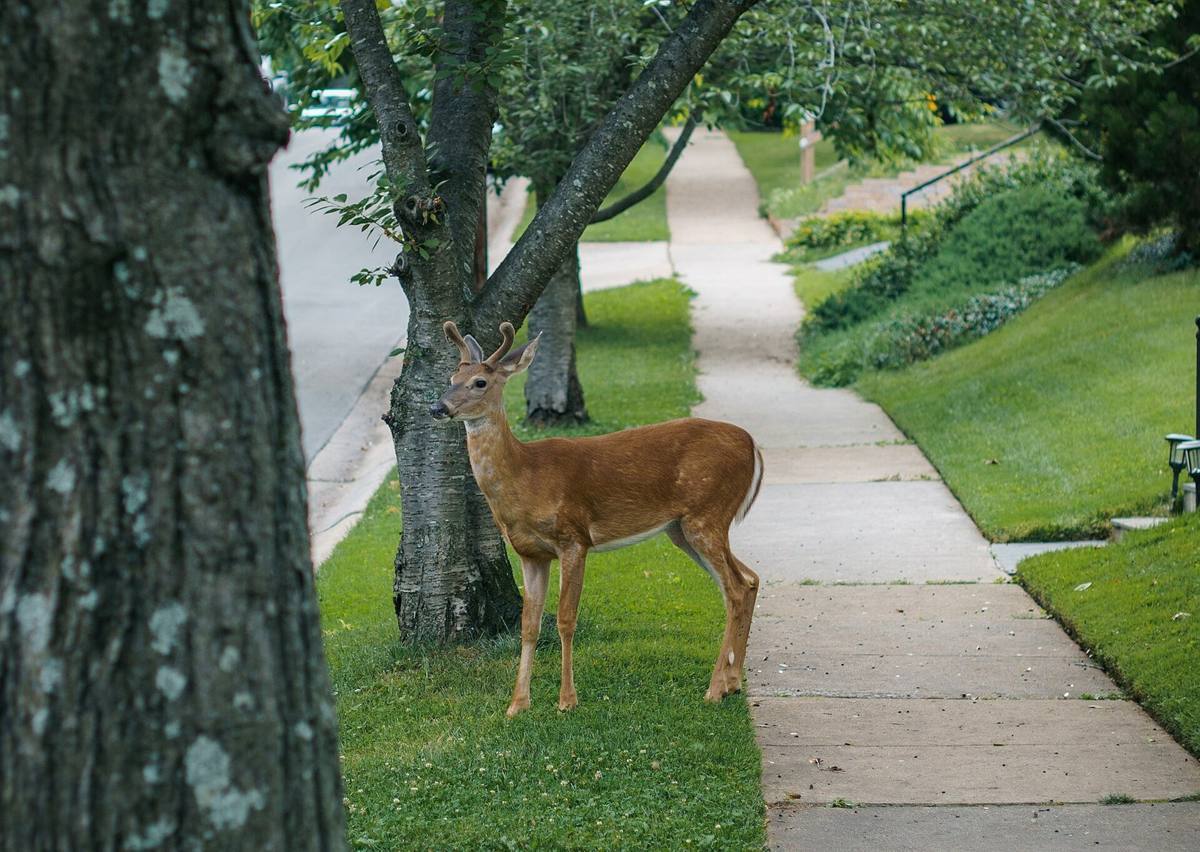
Communities drowning in landscape damage, deer-vehicle collisions, and tick worry often face a binary fight: hire professional sharpshooters or reopen land to regulated public hunting. New York DEC’s Community-Based Deer Management guidance treats both as lethal tools that work only when goals, access, and safety are designed first (NYSDEC CBDM). Cornell’s Community Deer Advisor catalog shows dozens of U.S. towns mixing paid culls, volunteer archery, and hybrids rather than picking one ideology (Cornell Community Deer Advisor).
Key Takeaways
- Sharpshooting (often USDA APHIS Wildlife Services or contractors) uses suppressed rifles, bait sites, night work, and closed parks for fast density cuts where discharge ordinances block hunting (Ann Arbor 2016 program; NYSDEC CBDM).
- Regulated hunting scales cheaper when parcels, setbacks, and hunter proficiency rules can be fixed; DEC lists doe-first tags, proficiency tests, and hunter caps as amplifiers (NYSDEC CBDM).
- Dense day-use parks often fail archery-only at scale; Arlington County rejected public archery because parks sit too close to residences for efficient daylight harvest (Arlington Deer FAQ).
- Hybrids are common: Meridian Township (MI) pairs sharpshooters with qualified volunteer bowhunters; Altoona (WI) shifted from paid shooters to volunteer hunts as conditions changed (Cornell Community Deer Advisor).
- Fertility control alone rarely solves free-ranging urban herds; DEC only allows surgical sterilization alongside concurrent lethal work nearby (NYSDEC CBDM).
What “sharpshooting” actually means
In municipal contracts, sharpshooting is not recreational night hunting. Ann Arbor’s 2016 program contracted USDA-APHIS Wildlife Services marksmen with suppressed firearms under a Michigan DNR special permit, closed selected parks during operations, and donated processed venison through Michigan Sportsmen Against Hunger to Food Gatherers (Ann Arbor 2016 program). New York’s Deer Damage Permits similarly authorize non-hunting lethal removal, including baiting and night shooting by professionals at discreet sites when damage is occurring (NYSDEC CBDM). Arlington’s hybrid plan centers contracted professional sharpshooting because peer-reviewed and regional National Park Service operations show faster population response than sterilization alone, then supplements with fencing and repellents for plant protection (Arlington Deer FAQ).
When public hunting can carry the load
DEC’s handbook framing is blunt: open previously closed parcels, fix firearm-discharge ordinances, and add Deer Management Assistance Program tags before declaring hunting “failed” (NYSDEC CBDM). Effectiveness levers include mandatory antlerless harvest before a buck, proficiency testing, and limiting simultaneous hunter numbers so stands are not a free-for-all (NYSDEC CBDM). Cornell’s Midwest examples show long-running archery programs on public and private parcels of minimum acreage (Kansas City’s five-acre threshold is one pattern) when collaboration with state agencies is real (Cornell Community Deer Advisor). New Jersey’s Community Based Deer Management Manual likewise treats controlled hunting inside normal season frameworks as often the most cost-effective first tool, with municipal CBDM permits reserved when traditional methods cannot solve quantified damage or crash counts (NJ CBDM Manual).
Why hunting fails in some suburbs
Arlington’s FAQ states public archery is impractical because parks are densely developed, heavily used, and too close to residences for archers to operate efficiently at scale during legal daylight hours (Arlington Deer FAQ). Discharge setbacks, school buffers, and liability politics can leave only nighttime, suppressed, baited sites that recreational hunters cannot legally or safely use. DEC’s 2024 urban deer management pilot for Syracuse and Southold explicitly expands damage-permit tools (bait near roads, spotlight with unloaded firearm, tighter structure setbacks with notice) because ordinary statutes still hobble cull efficiency in true urban fabric (NYSDEC CBDM).
Cost, venison, and non-lethal dead ends
Sharpshooting buys speed and control; hunting buys volume when access exists. Either lethal path should route carcasses to food banks; DEC partners with Feeding New York State, and Ann Arbor documented food-bank donation as a permit condition (NYSDEC CBDM; Ann Arbor 2016 program). Fertility control looks attractive politically but DEC lists labor intensity, booster shots, immigration of untreated deer, and multi-year lag before impact relief as reasons immunocontraception stays research-licensed and sterilization is allowed only with concurrent lethal work nearby (NYSDEC CBDM). Fencing protects plantings but rarely scales across a municipality (NYSDEC CBDM).
How communities should decide
DEC’s process order matters: measure impacts (crashes, browse, ticks), set measurable goals (not vanity density counts), pick tools, implement with education and feeding bans, then evaluate and adapt with the same stakeholders (NYSDEC CBDM). NJ’s CBDM application demands numerical damage or collision evidence, a municipal resolution, mapped special management areas, safety and notification plans, and Hunters Helping the Hungry-style donation pathways (NJ CBDM Manual). Cornell’s case library is the practical browsing tool for peer towns that already tried sharpshooting-only, archery-only, or hybrids (Cornell Community Deer Advisor).
Bottom line
Sharpshooting wins where parks, setbacks, and night/bait needs make recreational hunting unsafe or ineffective; public hunting wins where access and ordinances can be fixed and doe harvest is enforced (NYSDEC CBDM; Arlington Deer FAQ). Most durable programs borrow both and measure crashes and browse, not campfire opinions (Cornell Community Deer Advisor).
Related: Sunday hunting debate and Michigan public land access.
Pilot statutes and what hunters should ask councils
New York’s urban pilot for Syracuse and Southold is a reminder that even damage permits can be statute-bound: extra tools such as bait within 300 feet of a road, taking from a public highway, spotlight use with an unloaded firearm in a vehicle, and reduced structure setbacks with landowner notice require specific authorization (NYSDEC CBDM). Hunters lobbying for access should bring parcel maps, proficiency and insurance proposals, and doe-quota math rather than only opposing cull contracts. Towns choosing culls should publish closed dates, contractor credentials, and donation accounting the way Ann Arbor documented USDA operations and food-bank delivery (Ann Arbor 2016 program). Either path still needs a feeding ban and resident education on ticks and driving habits if impact goals are serious (NYSDEC CBDM; NJ CBDM Manual).
The other side of it
Hunters see a sharpshooting contract as a town paying for work they’d do for free, and closed parks with night shooting look like the public getting locked out of its own deer. The other camp says that in a dense neighborhood, speed and safety matter more than who pulls the trigger, which is why some towns chose contractors first. And every town meeting has someone against both options who’d rather the deer just politely moved.
Comments